The Circle of Life

On July 2, 1999, at the height of the Kargil War, Prime Minister Nawaz Sharif telephoned President Bill Clinton and asked for his personal intervention. Clinton was very clear on his message; Pakistan had to withdraw unconditionally and United States would not reward Pakistan for the violation of the Line of Control. On July 3rd, Sharif called Clinton again with a message: though not invited he was leaving for Washington D.C. immediately. Clinton remarked, “This guy’s coming literally on a wing and a prayer.”[1]

In 1999, Nawaz Sharif cut a sorry figure. He was like the resident of Tokyo trapped in front of Godzilla, but indecisive. Prince Bandar bin Sultan who picked Sharif at Washington airport told the Americans that Sharif was in mental pain about the crisis and scared about the reaction from the Pakistani Army, especially Musharraf.

There could be one explanation that this was an isolated incident. But in fact, always fearful and manipulated by Foreign Minister Sartaj Aziz and Foreign Secretary Shamshad Ahmad, Sharif was like like Rajesh Kuthrapalli on The Big Bang Theory. In 1998, Strobe Talbott, Bruce Riedel, Tom Simmons and Gen. Anthony Zinni met Nawaz Sharif to dissuade him from conducting a tit-for-tat nuclear test and Sharif, “seemed nearly paralysed with exhaustion, anguish and fear.”[1]

While many join Toastmasters to boost their confidence, conquer their fears and express ideas, nothing can match the fear of death and an exile in Saudi Arabia. On the day Yousaf Raza Gillani was sworn in as the Prime Minister, two American diplomats visited Pakistan and they saw Nawaz Sharif in a completely new avatar.

The leader of the second biggest party in the new Parliament, Nawaz Sharif, said after meeting the two American diplomats that it was unacceptable that Pakistan had become a “killing field.”“If America wants tosee itself clean of terrorists, we also want that our villages and towns should not be bombed,” he said at a news conference here. Mr. Sharif, a former prime minister, added he was unable to give Mr. Negroponte “a commitment” on fighting terrorism. The statements by Mr. Sharif, and the cool body language in the televised portions of his encounter with Mr. Negroponte, were just part of the sea change in Pakistan’s domestic politics that is likely to impose new limits on how Washington fights militants within Pakistan’s borders. [New Pakistani Leaders Tell Americans There’s ‘a New Sheriff in Town’]

The 16th century Malayalam poet Poonthanam wrote in Jnanappana, a treasury of transcendental knowledge, “In a day or two, it is He, who makes them ride on the royal chair.” Poonthanam was writing, of course, about the lilas of Guruvayoorappan, but impermanence as elucidated by ancient bhakti poets seem to predict the affairs in our neighboring country quite accurately.

Poonthanam also wrote, “People who is seen by all; you are the one who makes them disappear. On the shoulder of the king; you are He, who places a tattered heap.” If only President Musharraf could read Malayalam.

1. Strobe Talbott, Engaging India: Diplomacy, Democracy, And the Bomb: Revised Edition, (Brookings Institution Press, 2006).

The New Hyphenation

Mr. Prakash Karat, who admires the way Nirupama Rao was summoned at 2 AM by the Chinese, explains why we should not support the protests against Tibet.

“In our country also we have problems of separatism. Those who want the chorus of independent Tibet will be doing a disservice to India,” the CPI(M) chief said reminding that we also had secessionist demands in Nagaland, Jammu and Kashmir and other places.[CPI(M) goes hammer & sickle on Tibet]

B. Raman replies (well actually to Aamir Khan)

9. You and others, who have written on this subject, are correct in their references to Kashmir, our North-East, the grievances and anger of our Khalistanis and Muslims etc. We too have been having problems with our religious and ethnic minorities just as the Chinese are having problems with their minorities in Tibet, Sichuan, Gansu, Qinghai, Xinjiang and Inner Mongolia. No country in the world has been free of such problems.

10.The question to be asked is not whether we have the same problems as the Chinese, but what has been our approach to these probelms. Do we deal with these problems in the same way as the Chinese do or do we follow a different approach?

17. The leaders of Kashmiri and other separatist organisations freely interact with our media. They are interviewed by our print and electronic media and invited to participate in our TV talk shows. You recently attended the World Leadership Summit of “India Today”. I read in the media that one of those, who was invited to address the summit, was Yasin Malik, the leader of the Jammu and Kashmir Liberation Front. Can you mention a single instance since 1949 when Beijing has allowed a single dissident leader to similarly interact with the media and foreign diplomats? Have you ever seen a single interview of His Holiness in the Chinese media? Have you ever seen a single statement of his ever published in the Chinese media?

Read the entire post. Now that the moral equivalence between India and Pakistan has vanished, it is time to establish the hyphenation between India and China and treat a democracy and dictatorship the same way in term of human rights violations. Communists have been parroting those lines and now Aamir Khan has joined in. If someone stands up for India, call him a nationalist (add the word pseudo for more effect). Rinse and Repeat.

See Also: ‘Citizen’ Khan’?.Bravo Bhaichung, Whoring Aamir Khan Style

Technorati Tags: , ,

Seven Deadly Words

“Mario Puzo’s intriguing novel eschews the lyrical as the author instead crafts a poignant tale of family life and muses on the compelling doings of the Mob.” That line contains seven words which the editors of New York Times think appears in book reviews regularly.

Like all professions book reviewing has a lingo. Out of laziness, haste or a misguided effort to sound “literary,” reviewers use some words with startling predictability. Each of these seven entries is a perfectly good word (well, maybe not eschew), but they crop up in book reviews with wearying regularity. To little avail, admonitions abound. “The best critics,” Follett writes, “are those who use the plainest words and who make their taste rational by describing actions rather than by reporting or imputing feelings.”[Seven Deadly Words of Book Reviewing]

Conquering Attention Deficit Disorder

multitasking

(Image by altamar)

I decided to wash my car. As I start toward the garage, I spotted the mail on the hall table. I should go through the mail before I wash the car. I lay the car keys on the table, put the junk mail in the trash can under the table, and notice that the trash can is full. So I put the bills back on the table and take out the trash first. Since I’m going to be near the mailbox when I take out the trash anyway, I might as well pay the bills first. I see my checkbook on the table, but there is only one check left. My extra checks are in my desk in the study, so I go to my desk, where I find the bottle of juice that I had been drinking. I’m going to look for my checks, but first I need to push the juice aside so that I don’t accidentally knock it over.

At the end of the day: the car isn’t washed, the bills aren’t paid, there is a warm bottle of juice sitting on the counter, the flowers aren’t watered, there is still only one check in my checkbook, I can’t find the remote, I can’t find my glasses, and I don’t remember what I did with the car keys. [Age Activated Attention Deficit Disorder]

For a software engineer who is also an information junkie, life is equally hard due to attention deficit disorder. In the few minutes it takes to compile code, there is an urge to check Google Reader for updates. While going through blogs like Engadget, which has as many updates per day as the number of times N. Ram bows before China’s Ambassador to India, there is an impulse to skip most of the posts to reduce the unread count. By then Google News has updated and then you are deeply interested in what Nana Patekar did to Tanusree Dutta by which time the compilation is over and you forgot the code changes you made. And remember, the software engineer has not touched his Blackberry till now.

Multitasking essentially messes up the brain. The constant switching of tasks makes us concentrate on the act of concentration instead of the task. Immediately after the task is done, there is no recollection of what was done, like the case of the software engineer who read news during compilation and could neither remember the bug he had fixed nor the news he had read. Multitasking also boosts the stress related hormones and makes us grey earlier than our parents.

Constant multitasking results in the brain expecting you to perform many tasks at the same time. Soon you feel bored when you are just reading news. Eventually you might end up like actress Jenniffer Connelly who said, “I do like to read a book while having sex. And talk on the phone. You can get so much done.”

Before it gets that bad, something has to be done. You can remember fondly of your childhood when there were no iPods, cell phones or 24 hour news channels and delate technology for the distractions, but that does not solve the problem. To kick the multitasking habit effort is required and blogger John Richardson found a simple non-tech way.

Here’s how it works… Set a timer for 48 minutes. Close out all distractions and work continuously for 48 minutes. When the timer goes off, get up and stretch, get coffee, use the restroom etc, in the following 12 minutes. Repeat as necessary. [The Power of 48 Minutes]

There is nothing magical about 48 minutes; you could pick any convenient number. The point is to spent the time focused on the task. As sports psychologist H.A. Dorfman noted, “you have to build a structure of behavior and attitude. Behavior shapes thought. If a player disciplines his behavior, then he will also discipline his mind.” The goal should be to focus on the task, see only the eye of bird as Arjuna did, and let nothing else distract you. As Dorfman says about pitchers, “he should only think about three things: pitch selection, pitch location and the catcher’s glove, his target. If he finds himself thinking about something else, he should step off the rubber.”

In the article about Dorfman, David Brooks mentions, “there were intellectuals who thought the mind existed above the body, but that’s been blown away by evidence.” Buddhist monks will laugh at this confident assertion from the clerisy. According to Buddhist philosophy, sensations constantly arise in our mind which on repetation becomes strong emotion. When the cravings are strong, they over power the mind; we suspend judgement and act on the strongest impulse. Thus when the strong impulse to read news arises, we succumb to the craving unable to stop[1]

If by some means we are able to observe the sensation without reacting, the mind can remain balanced, peaceful and under our control. This control is possible by practicing mindfulness, and neuroscience has shown that mind can act on the brain and through pure thought brain activity can be changed. Through mindfulness it is possible to sustain attention on a task, re-orient the mind to the task when the attention is slipping, and exclude things which are not required for the task through executive control.

This is a problem that affects all of us and as Larry Wall says, “there is more than one way to solve it”, else…sorry, I just went to check news.

References

  1. William Hart, The Art of Living: Vipassana Meditation: As Taught by S. N. Goenka, 1 (HarperOne, 1987).

Technorati Tags: , , ,

The Chinese view of India

In San Francisco, the only North American city hosting the torch, officials shortened the April 9 route through the city and have abbreviated the ceremonies. Mayor Gavin Newsom has said no one will be prevented from expressing his views, but permits are required to gather near the torch.[Drama as torch arrival set for Tiananmen, though protests not expected]

The Chinese Ambassador to United States did not summon Mayor Gavin Newsom of San Francisco to his office at 2 A.M. Instead the ambassador made his way to the Mayor’s office in San Francisco to discuss the Olympic torch relay through the city.

Contrast it with this:

A sign of the nature of a relationship between countries is the manner in which they officially communicate displeasure. So when the Chinese government calls in the Indian ambassador at 2am, to hand her details of plans by Tibetan protesters to disrupt the movement of the Olympic torch in India, you know what the Chinese think about the nature of bilateral relationship. China might have reason to be angry. That it chose to be demonstrate unfriendliness reveals that it believes the proper way to handle India is through overreaction and bullying[Doing it at ungodly hours]

The editor of the People’s Daily of Chennai must be upset that Mayor Newsom was not summoned.

Technorati Tags: , , ,

Founding Faith

Pandering to the Christian Right, Presidential candidate Sen. John McCain recently stated that United States was a Christian Nation, despite the fact that United States has no official religion and has a clear separation of Church and State. According to Garry Wills, historian and Professor of History Emeritus at Northwestern University, the Founding Fathers were deists who believed in creation, providence and after life. They did not believe that Jesus was divine and you could get things by praying for them.

Steve Waldman has a new book, Founding Faith: Providence, Politics, and the Birth of Religious Freedom in America
which explores the religious beliefs of the Founding Fathers.

Franklin, we learn, believed that God created the universe, then gave over its governing to various minor gods. (Waldman describes this as a form of deism, though it strikes me as vaguely Gnostic.) John Adams’s “disdain for Calvinists was surpassed only by his contempt for Catholics,” and he appears to have been equally disgusted with many facets of orthodox Christian theology. For instance, he refused to accept that one bite from an apple “damned the whole human Race, without any actual Crimes committed by any of them.” Eventually, Adams joined a liberal Unitarian church, which emphasized Christ’s teachings rather than his divinity.

George Washington was raised as an Anglican but seldom went to Sunday service, refused to kneel and never took communion. In many ways, he was more active as a freemason than as a Christian. But he spoke up strongly for religious tolerance, even during the Revolution: “While we are contending for our liberty,” he wrote, “we should be very cautious of violating the Rights of Conscience in others, ever considering that God alone is the Judge of the Hearts of men, and to him only in this Case, they are answerable.” Waldman describes Thomas Jefferson as a “pious infidel” and James Madison as a “radical pluralist.” Jefferson viewed Jesus as a moral teacher and nothing more: He actually cut up a copy of the Gospels, removing all references to miracles and any claims that Jesus was more than human.

Madison appears to have respected religion without being seriously attached to any sect in particular. But, like his fellow Virginians, he did feel strongly the need for tolerance, and it is to him that Waldman believes we owe our freedom of conscience. He helped frame the Constitution, which mentions neither Jesus nor God, and later the First Amendment.

The Non-Violent Chicken

“Myself and my daughters would never like Sarabjit freed inexchange for any hardcore Pakistani terrorist lodged in Indian jails,” Sarabjit’s wife, Sukhpreet Kaur, told PTI. Ms. Kaur said that for the family, “nothing is above the nation and we can’t go against the interests of our motherland.”[We do not want Sarabjit in exchange for terrorists: wife]

In this day and age, when displaying nationalism condemns one to the lowest levels of the Indian liberal purgatory, it takes certain amount of boldness to be so politically incorrect. To fully appreciate Sukhpreet Kaur’s admirable trait, we need to take stock of the atmosphere of surrender in which this lady living.

When a group of Tibetan protesters were planning a march from Dharmasala to the border of India and China, the Indian Govt. stopped them to prevent any embarrassment to the Chinese. China’s Prime Minister warned India, his sepoys in India amplified their master’s voice and People’s Daily of China, published from Chennai put Stakhanovite stints in censorship. In fact, the Government is so scared of Chinese “feelings”, that the Prime Minister is scared to step foot in certain parts of our own country.

If Sri Ramakrishna were alive, he would have told the following parable to Manmohan Singh: Once there lived a violent poisonous snake and when he tried to attack a monk, the monk recited a mantra and the snake lay on his feet like an earth worm. The monk initiated the snake to spiritual life and asked him not to harm anyone in the future. Observing that the snake had become non-violent, the boys in the area started throwing stones at him. Seeing no reaction they caught him by the tail and swirled and flung him on the ground and left him for dead. The snake read Michael Pollan’s book, ate just fruits and became as slim as Katrina Kaif’s waist.

About a year later the brahmachari came that way again and asked after the snake. Hearing the teacher’s voice, it came out of his hole and bowed before him with great reverence. But, the teacher asked: Why are you so thin? It can’t be mere want of food that has reduced you to this state; there must be some other reason! The snake said: The boys one day dashed me violently against the ground. How could they know I wouldn’t bite or harm anyone? The brahmachari exclaimed: What a shame! you are such a fool! You don’t know how to protect your-self. I asked you not to bite, but I didn’t forbid you to hiss. And Ramakrishma concluded: So, you must hiss at wicked people. You must frighten them lest they should do you harm. But never inject your venom into them.[THE ORTHODOX CHURCH AND ETHNO-RELIGIOUS]

The leaders who are supposed to be role models are busy displaying competitive cowardice and preaching that being chicken is a virtue. When our leaders are scared even of fanfaronade and our business leaders are scared of singing the national anthem, it is comforting to know that ordinary citizens have a mind which is without fear and hold their heads high.

PS: In fact one should not insult chickens for even they display violent behaviour occasionally.

Technorati Tags: , , , ,

Book Review: The Snake Stone

The Snake Stone by Jason Goodwin, Farrar, Straus and Giroux; First Edition edition, 304 pages
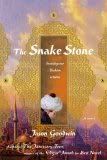
“Istanbul of 1830s was a city in which everyone, from sultan to beggar, belonged somewhere—to a guild, a district, a family, a church or a mosque”, writes Jason Goodwin in his second historical murder mystery: The Snake Stone. Sultan Mahmud II is on his death bed in the seventy-three bedroom palace satisfied over his accomplishments which included destroying the Janissaries, modernizing the army and creating a new identity for the citizens by a common dress code with the fez and the stambouline. The Greeks had declared independence from Turkey in 1832, but now in 1839, Greeks were being attacked in Istanbul.

When he came to know that grocer George was beaten up and book seller Goulandris was murdered, Yashim thought they were unrelated events. Yashim the eunuch was affiliated to the palace, but unlike other eunuchs, who worked in the palace as chaperons, messengers, protectors, and mediators, Yashim had his freedom. He could deflect attention, blend into the crowd and be invisible and this talent helped him successfully solve the murders of soldiers in the previous novel: The Janissary Tree. But when Maximilian Lefèvre, the shady French archaeologist who had arrived in Istanbul looking for Byzantine treasures, was found with his sternum split open, Yashim becomes a suspect since Lefèvre had spent the his last moments in Yashim’s apartment.

Yashim has to use his rapier skills — the ability to get information from people and navigate effortlessly through the palace as well as the markets — to unravel the mystery and save himself. A word from the Sultan; that was all that was required to save Yashim from the cloud of suspicion, but a dying Sultan who no longer lived in the Topkapi palace could not do it. The suggestion that Yashim could be connected to Lefèvres’ death could find a life in the palace where not everyone was Yashim’s friend. Even if it was proven that Yashim was not involved, suspicion was enough. Also Yashim had to hurry before others got killed.

As Yashim follows leads, investigating the mysterious Greek group Hetira, he encounters a kaleidoscope of nationalities living in Istanbul. There is his friend Stanislaw Palewski, the Polish ambassador to Sublime Porte; an ambassador of a county which was consumed by its neighbors and Dr. Millingen, the Sultan’s English doctor, who was with Lord Byron when he died fighting for the Greek War of Independence in Messolonghi. As Yashim finds out Lefèvre was looking for Greek treasures based on a Latin book written by Pierre Gyllius, a Frenchman who came to Turkey in 1550, the Jewish money lender Baradossa and the member of the waterman’s guild Enver Xani too get killed.

The history of Istanbul, from the days of Justinian to the time it was overrun by Ottomans, is mixed into the narrative as Yashim finds intricate connections between various nationalities; the history lessons are so delightfully blended that it never appears artificial. The Sultan’s French mother observes dryly that while the Turks wanted to be Europeans, she found the less formal Oriental life more interesting. The reader, through Yashim, discovers the complex relationship between various communities, but also various secrets that are ensconced under ancient monuments and with guilds; secrets for which people can be murdered.

When Goodwin wanted to write a work of fiction on Istanbul, after having written non-fiction books about it, it was his book editor who suggested a murder mystery. To make it engrossing, he chose the style of Dan Brown, writing short chapters interspersed with a few long ones. He also learned enough from Dan Brown not to end each chapter with a cliff hanger. Though a murder mystery, it never rushes forward madly, but even in the midst of deep intrigue, pauses a bit.

Goodwin’s tale is well crafted; like the beads in the hands of one of his characters, the shrewd housewife Mrs. Mavrogordato, he slowly and delicately takes the story forward. The resulting piece is neither an exhaustive longueur like I, Claudius nor artificial like Wilbur Smith’s Egyptian novels, but is a great Turkish dish, like the one which Yashim cooks often. Each character, like the ingredients in the dish has a part and only a careful reading, and sometimes re-reading, will make certain connections obvious. He stays away from the usual historical clichés of large battles, tales of kings and plotting viziers; his narration is along the lines of a Holmesian story, with focus on characters with vested interests. This very readable book recreates 19th century Istanbul splendidly and and the detailed observations of daily life helps in transporting us there.

Technorati Tags: , , ,

Official Chinese spokesman

NEW DELHI: The Indian Left, which takes its political cue from China, promptly echoed the line of their handlers in Beijing and asked the Manmohan Singh government not to meddle in the “internal affairs (read Tibet)” of the neighbour. The party, which raised objections over the visit US House of Representatives Speaker Nancy Pelosi to Dharamsala, said: “The government should see that their meeting does not turn into an anti-China meeting.”

Maintaining that Tibet issue was an internal affair of China, CPI general secretary AB Bardhan said, “All countries have internal areas where situation is sometimes disturbed. There should be no interference from anyone.” This loud advocacy for the respect for “One China” and “China’s territorial integrity” is not normally evident when Beijing makes its claim to Arunachal Pradesh. The Left, it be recalled, came out with a late response when China repeated its claim late last year.

It is heartening to see a newspaper write it so bluntly, along the style of bloggers. The title of the article , “Meet Mr Bardhan, China’s spokesman in India“, alone is priceless.

Technorati Tags: , ,

Sins 2.0

The Catholic Church has updated the list of sins. According to the new list, you are a sinner if you harm the environment, deal with drugs or do stem cell research. Amusingly you are a sinner if you have obscene wealth.

No, what’s perhaps most amusing is that in this modern age, someone still feigns to have the authority to invent new sins in the first place, to perpetuate the inanity of the very concept, to torque and mold and reshape divine will as he sees fit, just sort of making it up as he goes along, expecting everyone to basically kneel and cower and kiss the ring. Is that not fabulous, in a hey-look-we’re-back-in-1328 sort of way?

And yes, I also enjoyed the new sin of excessive wealth, given how the Vatican is one of the most — if not the most — gluttonously wealthy organizations on the planet, oozing with real estate and massive stock portfolios, dripping with cash, billions of dollars in hoarded treasure and unknown gems, icons, art, the solid gold vaginas of 1,000 pagan goddesses locked up in its vaults. The hypocrisy is positively comical. Epic. Makes Eliot Spitzer’s trifle look like Mary Ann smoking a roach in rural Idaho.[Thou shalt not kid thyself]