Due to the rasa leela of their hosting provider, all the national interest sites are down. Atanu informs that his site is also hosted there. The site owners are at work to resolve the issue.
Update: Till the sites come up, follow National Interest here.
Author: जयकृष्णः | ജയകൃഷ്ണൻ
Nov 26: Terrorist Attack in Mumbai
- The letter sent by Deccan Mujahideen (Updated on Dec 1)
- DesiPundit latest updates
- CNN-IBN Live Feed
- Twitter feeds from people in Mumbai
- Who are the Deccan Mujahideen?
- Vinu’s photographs from the ground
- DesiPundit has updates and sites from where you can get more news
- TweetGrid collects all twitter feeds related to Mumbai.
- Google Trends
- Wikipedia page on the terrorist attack
- Google Maps showing the sites
- Maharashtra Times has pictures of two terrorists coming out of CST.
I hope no one writes blog posts about the “Spirit of Mumbai” where everything is forgotten and people wait for the next terrorist attack.
History of Harivarasanam
That is a video of Yesudas singing one of the most famous Ayyappa songs – Harivarasanam – in his divine voice. This devotional song is sung every night and is Ayyappa’s lullaby. The Hindu blog has the history of the song.
This divine song which drenches the eyes of Ayyappa devotees in tears was written Kumbakudi Kulathur Iyer. Harivarasanam lyrics were composed in 1950. Kumbakudi Kulathur Iyer used to sing it daily when the temple doors were closed after performing the Athazapuja — serving the last meal of the day to Ayyappa. Today it is known as the Urakku Pattu — or the song that sends Ayyappa to sleep.
In the beginning, the main priest used to play flute while closing the doors of the temple. Harivarasanam became the Urakku Pattu of Ayyappa after the infamous fire incident in the 50s, which burn down the old temple. When the new temple was built and the pujas commenced, Harivarasanam was inducted as the Urakku Pattu — the song to send Ayyappa to sleep.[Who is the author of Harivarasanam?]
The e-Anjali newsletter of Kerala Hindus of North America has more details.
The ashtakam (8 stanza song) was first rendered at Sabarimala in 1955 by Swami Vimochanananda. In those days, only a few ardent devotees managed the difficult pilgrimage to Sabarimala in the deep jungles. The temple remained open during the November to January season but otherwise only on the first day of every Malayalam month. One Sri VR Gopala Menon from Alapuzha used to accompany the Melshanthi (head priest) Thirumeni Eashwaran Namboothiri to the Sannidhanam, and he would often stay there by himself in a shack even when the temple was closed, undisturbed by the wild animals, and often even feeding some animals. He used to sing Harivarasanam as the “urakkupaattu” (lullaby) for ayyappa swami at night. Later, when the Devaswom Board was formed, some say that he was asked to move out and he eventually passed away at a tea estate at Vandipperiyar.
When Thirumeni Eashwaran Namboothiri heard about the passing of the ardent bhaktha, he was deeply saddened. At the end of the day’s rituals, thirumeni was about to close Sannidhanam doors when he remembered the dedication and sacrifice of the bhaktha and he began to recite “Harivarasanam,” starting a tradition that remains unbroken to this day.
Pirates of the Mediterranean
Since Indian Navy is hunting pirates near Somalia, this would be a good time to listen to a pirate story.
Sometime in 75 B.C.E, Cilician pirates in the Mediterranean sea captured a young Roman orator. The pirates asked for a ransom of twenty talents to which the Roman laughed. He said he was worth a lot more and promised fifty. While his followers went to collect money, the Roman spent thirty eight days as a hostage.
During that time he acted as if he was the master. When he wanted to sleep, he ordered the pirates to be quiet. He played any sport he liked, wrote poetry and made speeches, while the pirates silently suffered. When the pirates showed no appreciation of his talent, he called them illiterate savages. He also jokingly said that he would hang all of them at the opportune moment.
The ransom soon arrived, much to the delight of the pirates, and the hostage was set free. The Roman followed the pirates, captured them, and put them in prison. When he asked the governor of the land to punish the pirates, the governor seemed not to be interested. The Roman then took matters into his hands, went to the prison, and hung all the pirates on a cross as he had promised.
This is why in Tortuga, when a pirate baby cries, the mother says, beta, so jaa, nahi toh Julius Caesar aa jaayega. (via)
(image via Wikipedia)
An Ancient Soulful Connection
According to the metaphysics of Hinayana the soul is a series of fleeting ideas. As per Nyaya, the individual souls are co-eternal with earth, water, fire and air. According to Ramanuja, soul is different from the body, sense-organs, mind, vital breaths and cognition.
In general according to Indian Philosophy, Atman, which originally meant life breath and later acquired the meaning “soul”, transmigrates and is different from the body. Thus the Bhagavad Gita says, “Just as old clothes are cast off and new ones taken, the soul leaves the body after the death to take a new one.” In ancient Egypt too, it was believed that the life force, Ka, left the body after death.
Compared to Indic and Egyptian religions, the Semites believe that the body and soul are inseparable, thus disallowing cremation. Now archaeology has found evidence of the concept of a soul separate from the body in Turkey dating to 800 B.C.E. In this case, the soul of the person, a royal official, Kuttamuwa, rests in a stele (stone or wooden tablet).
A translation of the inscription by Dennis Pardee, a professor of Near Eastern languages and civilization at Chicago, reads in part: “I, Kuttamuwa, servant of [the king] Panamuwa, am the one who oversaw the production of this stele for myself while still living. I placed it in an eternal chamber [?] and established a feast at this chamber: a bull for [the god] Hadad, a ram for [the god] Shamash and a ram for my soul that is in this stele.”[2,800-Year-Old Monument to the Soul Is Discovered in Turkey – NYTimes.com]
It would be interesting to see what the researchers find about this kingdom and who their influences were. Though an Egyptian influence seems rational, considering the proximity and the enormous Egyptian influence during that period, there seems to be no historical or archaeological evidence for this hypothesis.
The site, near the town of Islahiye in Gaziantep province, was controlled at one time by the Hittite Empire in central Turkey, then became the capital of a small independent kingdom. In the eighth century, the city was still the seat of kings, including Panamuwa, but they were by then apparently subservient to the Assyrian Empire. After that empire’s collapse, the city’s fortunes declined, and the place was abandoned late in the seventh century.[2,800-Year-Old Monument to the Soul Is Discovered in Turkey – NYTimes.com]
The Hittites knew about Indo-European speaking people as one of the earliest references of Vedic gods come from a treaty signed by Hittites and Mitannis dating to the fourteenth century BC which calls upon Indara/Indra, Mitras(il)/Mitra, Nasatianna/Nasatya and Uruvanass(il)/Varuna. Did Kuttamuwa’s people learn about this concept of the soul from the Indo-Europeans?
Agriculture or Complex Societies?
The discovery of the 11,000 year old temple at Gobekli Tepe in Turkey raised an important question: Did complex societies arise after the discovery of agriculture or vice versa?
Scholars have long believed that only after people learned to farm and live in settled communities did they have the time, organization and resources to construct temples and support complicated social structures. But Schmidt argues it was the other way around: the extensive, coordinated effort to build the monoliths literally laid the groundwork for the development of complex societies. The immensity of the undertaking at Gobekli Tepe reinforces that view[Gobekli Tepe: The World’s First Temple? | varnam]
The discovery of a 12,000 year old female shaman grave in Israel, 1000 years older than the stonehenges at Gobekli Tepe, supports the idea that complex societies arose before farming.
Agriculture was not established in the Levant when the Natufians lived there, but they still erected rudimentary structures to inhabit. Traces in the soil of the remains of mice and sparrows — animals that exist most commonly in places of human settlement — point to a significant population boom in the Natufian period. They may not have had seasonal harvests, but the people of this time lived in a complex and perhaps even flourishing society.[12,000-Year-Old Shaman Unearthed in Israel – TIME]
Valuable Discoveries
![]() |
| (The Unicorn Seal) |
The Smithsonian Magazine article about Gobekli Tepe, one of the oldest man-made place of worship yet discovered had the following anecdote.
Gobekli Tepe was first examined–and dismissed–by University of Chicago and Istanbul University anthropologists in the 1960s. As part of a sweeping survey of the region, they visited the hill, saw some broken slabs of limestone and assumed the mound was nothing more than an abandoned medieval cemetery. In 1994, Schmidt was working on his own survey of prehistoric sites in the region. After reading a brief mention of the stone-littered hilltop in the University of Chicago researchers’ report, he decided to go there himself. From the moment he first saw it, he knew the place was extraordinary.[Gobekli Tepe: The World’s First Temple? | History & Archaeology | Smithsonian Magazine]
The July 2008 edition of Calliope, a world history magazine for kids, has a similar anecdote about Sir Alexander Cunningham. This British archaeologist, who was the founder of ASI, was digging around in Harappa in 1853 and 1856 and found the unicorn seal. He did not make much of the seal and before he died in 1893, thought that his work was a failure.
On the contrary, this proved to be one of the most valuable archaeological discoveries ever made in India. Till then it was believed that the oldest cities in India dated to 700 BCE, but later work in Harappa pushed the antiquity of Indian civilization much farther in time and now we know that the Indus civilization peaked around 2500 BCE.
Indian History Carnival – 11
The Indian History Carnival, published on the 15th of every month, is a collection of posts related to Indian history and archaeology.
- As Tamil Nadu politicians and film stars are protesting against the killing of innocent Tamils without uttering a word against the LTTE terror, Priya Raju explains the relationship between the Sri Lankan Tamils and the Indian Tamils.
- A two hour climb on a hill in Nijagal near Bangalore takes you to a once-impregnable fort which has a story to tell. Sandeep has a gripping account of how Madakari Nayaka of Chitradurga captured Hyder Ali’s fort with the help of among other things, Giant Monitor Lizards.
- Did the Portuguese have a part in “cementing the dowry system and color consciousness into the Malabari cultural fabric?” Maddy writes about various Portuguese customs in Malabar.
- Calicut Heritage has a story about the Kerala Soap Institute, “which used to supply soaps to the Viceroy, among other dignitaries.”
- The Muslim community in Malabar had a monopoly in trade as “exporters of pepper and ginger, importers of horses and necessary produce for the great Vijayanagar empire that controlled almost all of the Deccan.” Soon they faced competition with the arrival of the Portuguese and the conflict between the Portuguese and Moplahs is the topic of Mamale of Cannanore: An Adversary of Portuguese India by the French Indologist Geneviève Bouchon. tangentialia has a translation.
- Search Kashmir has a detailed account of the nautch girls based on the accounts of various western travelers.
- Writing about the Divide and Rule policy of the British, Disjointed Laptop says, “If somebody asks me, about the British Divide and Rule policy, I would say it was purely Made in India.”
If you find any posts related to Indian history published in the past one month, please send it to jk AT varnam DOT org or use this form. Please send me links which are similar to the ones posted, in terms of content.The next carnival will be up on Dec 15th.
See Also: Previous Carnivals
Book Review: Bible of Clay
The Bible of Clay by Julia Navarro, 512 pages, Bantam (March 25, 2008)
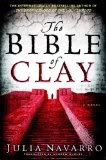
Last month, Israeli archaeologists found 3000 year old ceramic shards near a hilltop in Jerusalem. It had five lines of characters, believed to be the oldest Hebrew inscriptions ever found. Imagine if some tablets were found, similar to the one discovered in Jerusalem, in which Genesis as told by Abraham is written. Such a discovery proving the existence of a person called Abraham would be one of the greatest archaeological discoveries of this century.
An archaeological expedition in search for this ‘Bible of Clay’ is the main thread of Julia Navarro’s thriller. Finding this artifact is his life’s mission for the dauntless Alfred Tannenberg, a wealthy resident of Baghdad who discovered two tablets when he was young. He wants his grand daughter, Clara, an unknown archaeologist to discover the rest before he dies so that she gains respectability in the academic circles.
Clara and her family can get anything done in Iraq, since her husband Ahmed is well connected with Saddam’s inner circle. While they have money and power, what they lack is archaeological expertise. For that they rope in a French archaeologist and his team. Time is at a premium since there are rumors that the Americans might invade Iraq.
Besides the time pressure what would a thriller do if there are no bad guys plotting to kill the lead characters? There are in fact two teams tracking them, one with the goal of killing the Tannenbergs and the other to steal the tablets.
Alfred Tannenberg’s history and the motivation for the people out to eliminate him are explained in another thread which takes place during WWII. This structure of two threads in two different period of time was seen in The Betrayal: The Lost Life of Jesus where one set of events happened during the time of the Council of Nicea while the other happened after the crucifixion of Jesus.
Navarro takes it up one more level. There is a third thread about Abraham’s journey to Caanan and how he narrates Genesis to the scribe Shamas, who inscribes them into clay tablets. Shamas does not complete the journey to the promised land, but turns back and goes to Ur, which is where Clara is digging for them.
With such a structure which combines the ancient past with the present,you would expect a tight thriller and it does deliver the goods to a certain extent. It combines the recent past and the ancient past with contemporary events like the Iraqi invasion and the subsequent looting of the Baghdad museums to make it an captivating tale.
But it falters on few points which make the book a drag sometimes. First, there are a large number of characters which make it resemble a Robert Altman film. There are various groups with vested interests competing for things and each of those groups have a few people. Some of those characters have minor roles and probably could have been collapsed into one composite character.
The second one is the lack of attention to details. When you write, “the museum administrators had prepared a gallery with every security measure known to man”, it is not show but tell. There is much detail about the dig in Iraq and WWII era, but when it comes to ancient Iraq during the time of Abraham, it pales in comparison to the research of Jason Goodwin or Robert Silverberg.
Towards the end the author is in a rush to finish the book that it just runs all over the place to the point of being illogical. As Americans start bombing Baghdad on March 20 th, Clara is hiding in a hotel frequented by foreign journalists. Meanwhile there is a killer in the hotel looking for her. In the next chapter it is May 1st and the killer is still in the hotel looking for her.
Usually the protagonists of such novels are people who are people whom you like, but in this one the protagonists and antagonists differ on how ruthless they are to attain their goals. At the end you are not rooting for anyone, but hating most of them. With fewer characters and better editing, this could have become an even better thriller.
Ancient Rome in 3D
Google Earth 4.3 now has the Ancient Rome in 3D layer which will transport you to 320 CE. You can fly through the Forum, Colosseum and the city.
Now only if we could have layers which will fly us through Mohenjo-daro, Harappa, Kalibangan, Ghaneriwala, Pataliputra, Nalanda, Hampi, or Thanjavur.
