The Lost Translation of Judas

The Divine Comedy , Dante’s imaginative vision of the Christian afterlife, describes the poet’s journey through hell, purgatory and paradise. In Dante’s hell, there are nine concentric circles and in each region the sinners are punished in proportion to their earthly sins. The ninth circle is reserved for Lucifer and the traitors. Lucifer has three faces in which he chews three of the greatest traitors in history: Brutus and Cassius, Caesar’s assassins and Judas Iscariot, who betrayed Jesus.

This year The National Geographic published a translation of the Lost of Gospel of Judas. According to the National Geographic translation, Judas is the favorite disciple to whom Jesus imparts secret teachings. Contrary to the teachings of other Christian texts, Jesus came to save the world, predicted his own death and used Judas as an instrument in that process. According to this version, Judas is the good guy, a friend of Jesus who helps him achieve his life mission.

A new book,The Thirteenth Apostle by Dr. April Deconick says that the National Geographic translation is wrong.

I wrote this book because when I read the Coptic transliteration of the manuscript in April 2006, I realized that Judas was much more a hero in the National Geographic translation than he was in my own translation. As I worked through the Coptic and then sat and studied the text as a whole, I quickly came to see that Judas is not a good guy in this gospel. He is not Jesus’ friend or the greatest disciple. I began to wonder why the NG team translated in reference to Judas “daimon” as “spirit” when its most accepted translation is “demon.” I wondered why the team chose to say that Judas is “set apart for” the holy generation, when the Coptic actually reads that he is “separated from” the holy generation. And so forth.[What is different about my translation of the Gospel of Judas?]

In his lecture at the 19th International Conference on South Asian Archeology in Italy, Prof. B.B. Lal gave an example of how linguists can manipulate translations to suit their agenda.

A case in point is that of the well known Professor of Sanskrit at the Harvard University, Professor Witzel. He did not hesitate to mistranslate a part of the Baudhayana Srautasutra (Witzel 1995: 320-21). In 2003 I published a paper in the East and West (Vol. 53, Nos. 1-4), exposing his manipulation. Witzel’s translation of the relevant Sanskrit text was as follows:

“Aya went eastwards. His (people) are the Kuru-Pancalas and Kasi Videha. This is the Ayava(migration).(His other people)stayed at home in the west. His people are the Gandhari, Parasu and Aratta. This is the Amavasava (group).

Whereas the correct translation is:

Ayu migrated eastwards. His (people) are the Kuru-Pancalas and the Kasi-Videhas. This is the Ayava (migration). Amavasu migrated westwards. His (people) are the Ghandhari, Parsu and Aratta. This is the Amavasu (migration).

According to the correct translation, there was no movement of the Aryan people from anywhere in the north-west. On the other hand, the evidence indicates that it was from an intermediary point that some of the Aryan tribes went eastwards and other westwards.

The problem it seems was that National Geographic gave the manuscript to a few scholars who mistranslated. The originals were not made public and so no one else could read or correct these mistakes. Now National Geographic has decided to make this information public so that  scholars can read, debate and decide what those Coptic texts really mean.

In the Aryan Invasion folklore, the agenda is very clear, but in the case of the Lost Gospel of Judas story, it is not clear if it was a genuine mistake or agenda driven.

Demolishing 19th Century Paradigms

It was a long speech, but he was very clear about the message. Delivering the inaugural address at the 19th International Conference on South Asian Archeology in Italy, Prof B.B.Lal told the European Association of South Asian Archaeologists that they have to abandon the 19th century biases. Then with the clinical precision of a surgeon administering electric shocks to revive Dick Cheney’s heart, Prof. B.B.Lal demolished the Aryan Invasion Theory and tore apart some of the eminent historians and their guru Harvard University, Professor Witzel.

Professor Witzel and I happened to participate in a seminar organized by UMASS, Dartmouth in June 2006. When I referred, during the course of my presentation, to this wrong translation by the learned Professor, he, instead of providing evidence in support of his own stand, shot at me by saying that I did not know the difference between Vedic and Classical Sanskrit. Should that be the level of an academic debate? (Anyway, he had to be told that I had the privilege of obtaining in 1943 my Master’s Degree in Sanskrit (with the Vedas included), with a First Class First, from a first class university of India, namely Allahabad.)

When the Aryan Invasion Theory was demolished, a migration theory was adopted by Prof. Romila Thapar and the lines and the homeland of the Aryans was shifted to the region of Bactria-Margiana Archaeological Complex. Prof Lal shows that the BMAC people were not nomads and the characteristic features of BMAC never reached the Indus region.

Both Thapar and Sharma are even now laboring under the 19th century belief that the Vedic Aryans were nomads. But have they even once cast a glance at the make-up of the Bactria-Margiana Archaeological Complex. As would have been absolutely clear by now, the BMAC is a fully developed civilization with all the trappings of urbanism. How can then Thapar and Sharma devalue the Bactria-Margiana people and call them ‘pastoral cattle-breeders’? Just to fit into their preconceived notion that the Rigvedic Aryans were ‘nomads’?

But more strange is the argument that the occurrence of a single antennae-hilted sword in Bactria would entitle that region to be the ‘motherland’ of the Gangetic Copper Hoard people who produced these copper weapons and other associated objects in hundreds, if not thousands.

If, following the footsteps of Parpola, I were to say that the find of the well known seal of the ‘Persian Gulf’ style at Lothal in Gujarat establishes that the Persian Gulf Culture (which abounds in such seals) originated in Gujarat or, again, if I said that the occurrence of a cylinder seal at Kalibangan in Rajasthan entitles Rajasthan to be the ‘motherland’ of the Mesopotamian Culture (wherein cylinder seals are found in large numbers), I am sure my learned colleagues present here would at once get me admitted to the nearest lunatic asylum.

Migration theorists claim that the BMAC people were the ancestors of the Iranians and Indo-Aryans because they had fire-worship, homa rituals, evidence of asvamedha and some cult motifs. He takes the case of fire worship and proves that the direction of movement of that was from India to Central Asia and not the other way. He also shows that there was no soma/homa in BMAC, the skeleton of the horse was not one from an asvamedha, and that the motifs found on the cylindrical seal could be anything depending on your imagination.

He then brings in genetic studies

“As for the question of biological continuity within the Indus Valley, two discontinuities appear to exist. The first occurs between 6000 and 4500 BC … and the second occurs at some point after 800 BC.” In other words, there was no entry of a new set of people between 4500 and 800 BCE, much less of Aryan invaders / immigrants !

The Y-chromosomal data consistently suggest a largely South Asian origin for Indian caste communities and therefore argue against any major influx, from regions north and west of India, of people associated either with the development of agriculture or the spread of the Indo-Aryan language family.”

Will this right-on-the-face lecture change the European mindset.? It probably will not, but at least the lecture makes it crystal clear that some people don’t take the Eurocentric world view seriously any more.
The secret biological weapon

ram

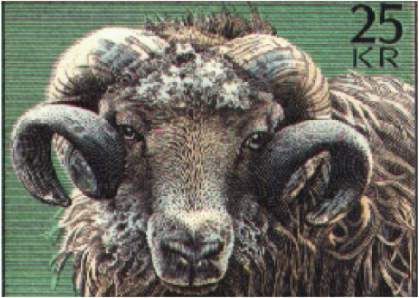
You are looking at a biological weapon which was used in war about 3300 years ago. The story starts when the Hittites,people who lived in north-central Anatolia from the 18th century BCE, were weakened by plague around 1335 BCE. The Hittites were then attacked by the Arzawans from Western Anatolia triggering then Anatolian war which lasted between 1320 and 1318 BCE. Even though the Hittites were weak, they managed to defeat their enemy in two years and one theory is that their secret weapon was disease ridden rams and donkeys.

To support the bioweapon theory, tablets dating to the 14-13th century B.C., describe how a ram and a woman attending the animal were sent on the road, spreading the disease along the way. “The country that finds them shall take over this evil pestilence,” the tablet said. The practice was soon understood by the Arzawans who also reacted by sending their own infected rams on the road in the direction of the enemy troops.

“Even older evidence for ancient understanding of contagion comes from Sumer (modern Syria). Archaeologists have found several royal letters on cuneiform tablets from the archives of Mari, a town on the Euphrates River. The letters, dating to 1770 B.C., forbid people from plague-ridden towns to travel to healthy towns, and warn people not to touch or use the personal belongings of infected victims,” Mayor said.[Sick Rams Used as Ancient Bioweapons]

Mindfulness for Stress Reduction

Historian Garry Wills was on stage with Dalai Lama one day and he asked the Buddhist monk what he would do if he ever got Tibet back. The Dalai Lama replied that he would enforce the separation of the Church and State, the American way. Gary Wills replied that a pre-requisite would be Enlightenment (not the Buddhist one, but the 18th century movement which includes Deism). The Dalai Lama smiled and went and wrote a book, The Universe in a Single Atom which is about the need for a dialog between scientists and those interested in spirituality.

Partly due to the efforts of the Dalai Lama and partly due to the adoption of Buddhist spiritual techniques by Americans there has been a scientific enquiry into what happens to us during meditation. These studies are being conducted in reputed universities and also at the National Institute of Health. Also there has been an adoption of mindfulness as a practice for stress reduction and this program is now offered in hospitals around the country.

In this video, Dr. Jon Kabat-Zinn who developed Mindfulness Based Stress Reduction talks about the program and the results.

Prakash Karat's history lesson

Recently CPI (M) General Secretary Prakash Karat called President George Bush a fool andsaid that he had a poor understanding of history. Mr. Karat was attending a function commemorating the 90th anniversary of the 1917 October Revolution was angry that President Bush had compared Lenin to Osama bin Laden and Adolf Hitler. But guess who has a poor understanding of history?

Following an assassination attempt on Lenin, Stalin wanted a policy of “open and systematic mass terror” to be enforced and Lenin agreed. Red Terror was announced as a policy on September 1, 1918.

“To dispose of our enemies, we will have to create our own socialist terror. For this we will have to train 90 million of the 100 million of Russians and have them all on our side. We have nothing to say to the other 10 million; we will have to get rid of them.”

Do not look in the file of incriminating evidence to see whether or not the accused rose up against the Soviets with arms or words. Ask him instead to which class he belongs, what is his background, his education, his profession. These are the questions that will determine the fate of the accused. That is the meaning and essence of the Red Terror.[Purpose of the Soviet Red Terror]

According to some historians between 1917 and 1922 about 280,000 people were killed through summary executions and supression of rebellions. The repression was against peasants, industrial workers and any one who did not agree with the revolutionaries. Still such brutality is not called holocaust by historians because that credit goes to Hitler alone.

The Sunday edition of New York Times had two stories related to that era and the first one is about the last Russian czar Nicholas II, and his family whom Lenin ordered to be killed in July 1918. Eleven people (czar,the czar’s wife, five children, doctor and three servants), were  killed, but the remains of only nine were found. A bunch of amateur detectives have now found some bones and pieces of jars that held the acid used to disfigure the bodies and DNA tests will decide if they belong to Aleksei, 13 and his sister.

The second story is about the time of Stalin. In his book The Whisperers: Private Life in Stalin’s Russia, Orlando Figes writes about what happened to millions of ordinary people during the time of the great communist revolution.

Each story had its own disheartening logic. Stalin’s campaign to intimidate the population had no moral limits. Figes tells of Pavlik Morozov, a teenager said to have been killed by older family members because he had denounced his father for selling false papers to kulaks living in nearby “special settlements.” (The kulaks were a category of so-called richer peasants who were regarded as the principal obstacle to collectivization.) The father was sentenced to a labor camp and later shot. After the boy’s death, the Soviet press created “a propaganda cult” around his case. Maxim Gorky called for a monument to be erected because the boy had “understood that a relative by blood may also be an enemy of the spirit, and that such a person is not to be spared.”[Stalin’s Children]

Similar to how Jihadis around the world worship Osama bin Laden people like Prakash Karat worship mass murderers like Lenin and Stalin and they get offended when the truth about them is told. Mr. Karat may hate George Bush, but at least the latter has his history right.

The Benevolent Empire

Walter Russell Mead has a new book God and Gold: Britain, America, and the Making of the Modern World in which he argues that United States has become the logical successor of British Empire. According to Mead, these empires are benevolent and people are happy to belong to them. This outrageous statement has been taken to task by the New York Times book reviewer.

Really? Is that how it looked in, say, India? When Clive of India came to Bengal, he described it — in a way all visitors of the time did — as “extensive, populous and as rich as the city of London.” It was a place of such “richness and abundance” that “neither war, pestilence nor oppression could destroy” it. But within a century of British occupation, the population of its largest city, Calcutta, fell from 150,000 to 30,000 as its industries were wrecked in the interests of the mother country. By the time the British left, Calcutta was one of the poorest places in the world. Is this really the baton the United States should pick up?

Tamilians in Ancient Egypt

paanai oRi. Those words mean pot (suspended) in a rope net and that was inscribed in Tamil Brahmi script  on both sides of a storage jar. The jar was found in Quseir-al-Qadim, an ancient Egyptian port and was dated to the 1st century BCE when Egypt was under Roman control.

According to Mr. Mahadevan, the inscription is quite legible and reads: paanai oRi, that is, ‘pot (suspended in) a rope net.’ The Tamil word uRi, which means rope network to suspend pots has the cognate oRi in Parji, a central Dravidian language, Mr. Mahadevan said. Still nearer, Kannada has oTTi, probably from an earlier oRRi with the same meaning.

The word occurring in the pottery inscription found at Quseir-al-Qadim can also be read as o(R)Ri as Tamil Brahmi inscriptions generally avoid doubling of consonants. Earlier excavations at this site about 30 years ago yielded two
pottery inscriptions in Tamil Brahmi belonging to the first century
A.D.

Another Tamil Brahmi pottery inscription of the same period was
found in 1995 at Berenike, also a Roman settlement, on the Red Sea
coast of Egypt, Mr. Mahadevan said. These discoveries provided material evidence to corroborate the
literary accounts by classical Western authors and the Tamil Sangam
poets about the flourishing trade between the Tamil country and Rome
(via the Red Sea ports) in the early centuries A.D.[Tamil Brahmi script in Egypt ]

Origins of bourgeoisie

Karl
Marx, the father of communism, argued that contradictions within
capitalism would bring about its own end and it would be replaced by
communism. He also believed that capitalism would end through the
organized actions of the working class. We don’t know if Indian
Naxalites have read or believe in these fairy tales, but they have
taken it on themselves to murder people in the name of this ideology
and they believe that murdering feudal landlords is the way to
salvation. People of the Early
Middle Ages
(500 – 1050 CE) would have disagreed
with this point of view.

During
the Early Middle Ages, the society was mostly agrarian and
feudalism was built on an economic foundation known as manorialism.
A lord controlled a manorial village and some lords controlled many.
In the village, there were peasants, blacksmiths, carpenters, and
priests and at the bottom of the food chain was the serf who
lived in a hut along with chickens and pigs. The hut was smoke filled
and when it rained the earth floor would turn into mud. The serfs
earned no respect and they were depicted as ugly, dirty and cowardly
creatures.

Manorialism and Feudalism expected a social order that was stable
and organic. People were expected to accept their social status and
perform the role as per their ranking in the social order. This
social order was not to be upset and people were not expected to
change their position in this social order. The clergy helped in this
aspect by maintaining that, “God himself willed that among men
some must be lords and some serfs.”

As Europe moved into
the High Middle Ages, there was a revival of urban economy and the
re-emergence of central authority. With the invention of the heavy
plough
, the use of windmills for grinding cereals, and three-field system of managing  land, there was an agricultural
revolution. The rebirth of towns led to a commercial revolution and
the rise of an enterprising and dynamic middle class. The development
of towns gave new opportunities to the serfs and they escaped from
the manor seeking fortune and freedom. Some of them made a living
selling food and the others through trade.

The lords despised
people who made a living through trade because they thought trade and
manual labor were degrading. The clergy cursed them because they
thought that the pursuit of riches was shameful and was an obstacle
for salvation. They finally came up with a name for these dynamic
progressive people — bourgeoisie which means citizens of the
burg,
the walled town.

The feudal and manorial establishments were
not destroyed by revolts but by a change of the economic system. The
change of economic system was not from feudalism to classless
stateless clueless concepts of mass ownership, but into capitalism. 
It was not violence but economic opportunities and financial freedom
that changed the lives of the serfs.

Reference: Western Civilization Volume 1, Medieval Civilization In Western Europe

Coming soon to Gujarat

When the California based Global Heritage Fund wanted to set up a 100,000 museum to show case the treasures of Indus Valley they asked Jonathan Mark Kenoyer  to suggest a good location for it. Dr. Kenoyer told it had to be in Gujarat. This is because Gujarat has the largest number of Indus sites and Maharaja Sayajirao University in Baroda has the second largest collection of Indus artifacts in India.

The Indus Heritage Center will be established as a museum and research center and will take people back in time to experience the cities of Dholavira, Harappa and Mohenjo-Daro. Their goal is to build a Smithsonian style museum which will educate people about India’s cultural heritage and teach them more about Indus valley which was contemporaneous with the civilizations of Mesopotamia, Egypt, and early China.

Much
of this initial knowledge-exchange has been made possible by seed
funding given by Silicon Valley Indian Americans, Desai said. “There is
exciting, groundbreaking research going on, except, in the case of the
Indus Civilization, there hasn’t been enough attention to the subject
nationally or even in the subcontinent. Unlike Ancient Egypt, there is
a paucity of material on Indus for the common man. This idea aroused
the passion and sparked the interest of our founding sponsors.”

The
time is ripe, Desai believes, for a museum such as the one planned.
“The Indus Civilization had an innovative, entrepreneurial,
international character,” she pointed out. “There are many unique
features to marvel at in the culture, and with the help of today’s
technology, it will be brought into the limelight.” Extensive media
coverage of India in recent years has also heightened public interest
in the subcontinent and its history, she added. “There’s a lot of
curiosity right now — it’s time to capture that momentum.” [Indian Americans Spearhead $15M Indus Valley Museum]

The Clueless Economist – Part 2

The Economist  thinks that India is being threatened by religious violence and by reading the article it seems like the editors of the clueless Economist seem to have forgotten what religious violence is.

Saint Paul (CE. c 5 – c. 67) started out by persecuting the followers of Jesus, but later underwent a spiritual transformation and became a zealous missionary of Jewish Christianity. As the number of Christians increased, Romans thought of them as subversives who did not preach allegiance to Rome. To stamp out Christianity, the Roman emperors resorted to persecution and Christians were imprisoned, beaten, starved, burned alive and torn apart by wild beasts for amusement. By 392 C.E., Christianity became the state religion of Rome and the worship of pagan gods was made illegal.

With Christians in power, the target of persecution became Jews and unorthodox Christians as well. Christianity, since it claimed to posses an exclusive right to salvation, felt the need to cleanse the society of false gods and beliefs. Thus mobs driven by fanatic clergy threw non-Christian writings into fire, destroyed pagan altars and passed decrees calling for the imprisoning, torturing and executing followers of pagan cults. Jews, pagans and heretics were identified with Satan and Christians showed considerable hostility towards them.

The anti-Judaism came from the refusal of Jews to accept Jesus and the polemics of the Jewish establishment against the followers of Jesus. Origen (c. 185 – c. 251), and John Chrysostom with their writing helped in maintaining the hatred. Oh, then there were the Crusades where people of one book fought people of another book. During the First Crusade zealous crusaders argued that they had to get rid of the enemies in the midst as well and slaughtered Jews in French and German towns. In 1290 Jews were expelled from England, in 1306 from France and between 1290 and 1293 from southern Italy. Between 1348 – 49, during the time of Black Death, Jews were accused of poisoning the well water and were killed in many towns. With the arrival of Islam, Christians and Jews living in Islamic lands had to accept subordinate status and were required to wear special clothing as a sign of humiliation, but Jews were much safer in Muslim lands than Christian ones.

The violence was not just against other religions, but also against members of sects within the same religion. In the Council of Nicea an important controversy was the relation between God and Christ. Followers of Arius (250 – 336 CE) denied complete divinity to Christ and claimed that Father alone was eternal and truly God. The council condemned Arius and ruled that God and Christ were of the same substance, coequal and co-eternal. Arianism eventually died out, helped by persecution. In the Middle Ages one of the most radical heresy to confront the church was the Cathari. The Cathari did not believe that Jesus took human form, died on the cross or resurrected. Pope Innocent III asked the kings and lords to exterminate Catharism with the sword and the Dominican and Franciscan inquisitors completed that task.

While these are historical tales, there are examples of religious wars among various sects in Ireland and Pakistan even in the 21st century. Religious violence in Western civilization resulted in wiping out certain communities from the face of the earth, like pagans, Arians, and Cathari. There is communal violence in India, but it is no where near the religious violence that Western Civilization has unleashed in this world. Hence these words should be used cautiously and not carelessly like the way Manmohan Singh uses the word Holocaust; unless of course the intent is mischief.

See Also: The Clueless Economist