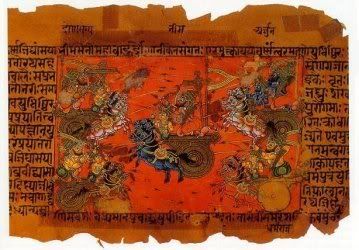
The Chinese Agents in India

Amulya Ganguli writes about the Indian Communists and who they owe allegiance to.

In this tussle for supremacy, India is at a disadvantage because China can count on whatever support it can receive from its friends in India. The latter’s strenuous efforts to scuttle the nuclear deal is evidently a part of their tactic of undermining India’s ambition to secure the “Big 5 plus 1” position at the high table of diplomacy. The CPM has even been candid enough to admit that one of its reasons for opposing the deal is that the resultant proximity to the US will enable America to encircle China with India’s help. Even if this is indeed the American objective, such an alliance will also have the potential of curbing China’s bellicosity in the north-east, especially in “southern Tibet”, as Beijing likes to call Arunachal Pradesh.

Like the Chinese, the Indian communists believe in the untenable “colonial” nature of the McMahon Line, which calls for adjustments although the Chinese have had no hesitation in accepting the same line in Myanmar. Given this stance, it is hardly surprising that in 1962, E M S Namboodiripad had argued, according to Mohit Sen in his book, A Traveller and the Road: the Journey of an Indian Communist, that “the Chinese had entered territory that they thought was theirs and hence there was no question of aggression as far as they were concerned”.[Together They Stand]

A Spanner in Reviving Sanskrit

This January, the Indian Govt. cut funding for a Sanskrit program because it is now a sin to learn an ancient language and the reason: India has a large Muslim population.

Such camps, run by volunteers from Hindu nationalist groups, are designed to promote a language long dismissed as dead, and to instill in Hindus religious and cultural pride. Many Sanskrit speakers, though, believe that the camps are a steppingstone to a higher goal: turning back the clock and making Sanskrit modern India’s spoken language.

Their endeavors are viewed with suspicion by many scholars here as part of an increasingly acrimonious debate over the role of Sanskrit in schools and society. The scholars warn against exploiting Indians’ reverence for Sanskrit to promote the supremacy of Hindu thought in a country that, while predominantly Hindu, is also home to a large Muslim population and other religious minorities.

“It is critical to understand Sanskrit in order to study ancient Indian civilization and knowledge. But the language should not be used to push Hindu political ideology into school textbooks,” said Arjun Dev, a historian and textbook author. “They want to say that all that is great about India happened in the Hindu Sanskrit texts.”[Summer Camps Revive India’s Ancient Sanskrit]

When the Supreme Court of India writes judgements admiring the language in which Indian minds expressed noblest ideas, it takes the UPA Govt. to accuse that it is communal. Instead of whining about the Govt. the best course of action would be to organize a Samskrita Bharati camp in your area.

Indian History Carnival – 6

The Indian History Carnival, published on the 15th of every month, is a collection of posts related to Indian history and archaeology.

  1. A recent article in The Mint by Mr. T.R.Ramaswami suggested among other things (a) there is a conspiracy to maintain that Mahābhārata war did not happen between 2500 – 1500 B.C.E (b) 18 day wars could happen only after railways came into existence (c) Valmiki could be a Russian and (d) both Mahābhārata and Rāmāyaṇa took place outside India, on the Russian steppes and were transplanted to India. Eroteme has a response. The Mint also posted a response by me.

  2. Drawing heavily from Kitabu’l-Hind by Al Biruni, kupamanduka unravels the history of xenophobia in India.

  3. How did the Chinese trade with the Malabaris without knowing the language. Maddy explains how fingers talked.

  4. The Battle of Pratapgad was fought between the Shivaji and Afzal Khan in November 1659. Despite having fewer forces, the Marathas got their first significant victory over a regional power and Shivaji became a larger than life person. Kedar says that when people sang about his heroics, they forgot about his strategies.

  5. Amardeep writes what he learned about Shivaji from James Laine’s Shivaji: Hindu King in Islamic India.

  6. Law Matters writes about the administration of justice in Madras in the seventeenth century.

  7. Szerlem looks past the disrepair and ASI’s disinterest in maintaining the Nizamuddin basti in Delhi and catches glimpses of an ancient past.

  8. Shantanu writes about the Gandhi-Bose rivalry.

  9. Pragmatic has a post about the people India and Pakistan sent to argue Kashmir in United Nations and what happened to both at the end.

  10. From Kamasutra to social conservatism – Hari wonders how this change happened.

If you find any posts related to Indian history published in the past one month, please send it to jk AT varnam DOT org or use this form. Please send me links which are similar to the ones posted, in terms of content and don’t send details of your personal temple visits. The next carnival will be up on July 15th.

See Also: Previous Carnivals

The "Secular" Lakshmana Rekha

Yesterday American F-15 jet fighters and B-1 bombers dropped bombs on a Pakistani Frontier Corps checkpoint killing soldiers and thus escalating the tensions between the “allies” in the war on terror. A study by RAND Corp had warned few days back that Pakistani intelligence agents and paramilitary have been aiding Taliban in attacking the Americans. The Pakistanis, used to applying this design pattern in the Kashmir border, thought the response would be a threatening letter or in the worst case scenario, a speech from Karzai, but instead found strong retaliation.

Such an asymmetric warfare happened in Kerala too.It all started with the State Women’s Commission asking the Government to make sure that girls below 18 are not forcibly enrolled as nuns. The Church was furious. The Congress said that the government had no role in managing religious beliefs. The chairperson of the Commission was asked to quit. After lot of noise, the Commission has decided to go “soft” on the issue for no one expected that F-16s and B-1s would be seen on the horizon.

Last year the Communists desperately wanted to get singer KJ Yesudas inside Guruvayoor temple. One minister, Sudharakan, wanted women to have darshan at Sabarimala. Both issues, at this moment, go against Hindu beliefs. (Reforms are required and it is for Hindu priests and religious authorities to decide). At that time we did not see sanctimonious lectures from the Congress Party on the need to stay away from religious beliefs. Maybe Congress leader Ramesh Chennithala was busy helping Rajasekhar Reddy decide if Ahmadiyas are Muslims or not.

In the version of secularism practiced by Indian Govt. there is the Durand Line and the Line of Control. The Line of Control is like a tourist spot; anyone can walk in, urinate, and walk away. But the Durand Line is the Lakshama Rekha. If you do tourism there, as Rajiv Gandhi succintly put it, “naani yaad aayegi“.

Role Model for Maoists

In Russia

As Clifford Levy wrote in The Times last week, Russia’s national networks, the most powerful media in the country, are routinely deleting news or opinions critical of the Kremlin. In one notable case, Mikhail Delyagin, a well-known political analyst, criticized Vladimir Putin during the taping of a talk show. When the program aired, Mr. Delyagin was missing. Or, most of him was missing. His disembodied legs remained in the picture.

Meanwhile, in Nepal

Addressing a rally to celebrate the declaration of republic in Kathmandu Prachanda said his CPN-Maoist will not tolerate further criticism by the media and warned of serious consequences if it continued to criticise the party. Targeting the Kantipur publication that brings out the largest circulated dailies Kantipur and The Kathmandu Post, the former rebel leader said, “You journalists did well to continuously criticise the Maoists before the constituent assembly polls, otherwise the election would not have taken place at all.”“Now we will no longer tolerate criticism as we have already been elected by the people,” he said, adding that the other newspapers criticising the Maoist will also meet the same fate.[

The Maoists, who are not as tech savy as the Kremlin folks, know only one way to make a man disappear and it won’t be pretty. This would be a good time for Siddharth Varadarajan to explain to the Chairman how press functions in a democracy.

My op-ed in Mail Today: Cultural Liberalism

This was the same piece that was published in Pragati, but enhanced with few hundred words, based on suggestions from Ranjith and Oldtimer. Also thanks to Nitin for first publishing it in Pragati.

Governments usually ban books and movies when they think it has or can upset religious sentiments resulting in a break down in law and order. While that may be the official reason, the ground reality is that it is connected to politics. The Communists became a pot among kettles when they banned Taslima Nasreen’s book Dwikhandito in West Bengal and when Chief Minister Buddhadev Bhattacharya ordered the cancellation of the screening of “Taurus”, a film which showed Lenin in a less admirable light. With all these bans, the governments made it clear that they would rather appease than take an honorable stand.

As usual there will be mob violence and selective outrage, but let not the Iranian Ayatollahs and Bangladeshi fundamentalists be our role models. Instead, it is illuminating to read these lines which Justice Sanjay Kishan Kaul wrote in the M.F. Hussain verdict, “A liberal tolerance of a different point of view causes no damage. It means only a greater self restraint. Diversity in expression of views whether in writings, paintings or visual media encourages debate. A debate should never be shut out.”[JPG/PDF]

Lets First do Archaeology

Mr. Ramaswami, a proponent of Aryan Invasion Theory and subsequent corollaries like Rāmāyaṇa and Mahābhārata happened in Russia, recently left a comment on my blog post with some questions. This was related to his article on Mint claiming that there was an Aryan Invasion and my subsequent response citing two papers which show that there was none.

He wrote

In attempting to refute my theory, Nair has waxed eloquent about DNA, linguistic history etc but does not have the courage, for obvious reasons, to state with conviction the central question raised in my article – what is the
date?

The only reason I don’t mention the date is because: I don’t know. This is mostly because I have not seen a consensus date among historians and archaeologists so far, not because I have any agenda.

Instead, everyone has their favourite date based on their favourite techniques and Dr.Subhash Kak has a good summary. The dates vary from 5th millennia (based on astronomical references) to 1000 B.C.E. One argument was that we don’t find any dates between 2500 – 1500 B.C.E, but Dr. Kak’s paper mentions 1924 B.C.E as a possible date.

The date of 1924 BC. Based on Puranic genealogies that see a gap of 1000 years or so between the War and the rule of the Nandas (424 BC) we get the date of 1424 BC. But Pargiter, while editing these accounts from the various Puranas,4 suggested that the original number was 1,500 which was wrongly copied in various texts as 1000, 1015, or 1050. I accept the arguments of Pargiter and, therefore, consider the Puranic tradition to support the date of 1924 BC. [The Mahabharata and the Sindhu-Sarasvati Tradition]

Mr. Ramaswami is quite right when he says that it is strange that there is a spread of millennia for an epic which tells the story of a few generations and we cannot accurately nail it to a specific date. It would be helpful if we could find some horse bones or evidence of Ashwamedha or of the palace at Indraprastha. It would indeed give closure if we could say for sure if Mahabharata was real history, or a minor history event embellished by Vyasa or just poetic imagination. Does this look absurd compared to the certainity of events in Egypt and Mesopotamia? It certainy does.

Ramaswami says

f you were the Indian government would you not dig up these places like the Mumbai Municipal Corporation right down to the centre of the earth if necessary? What we done and what have we found? Let me tell you the answers. If at all they have dug they have found nothing or found something to the contrary. After all if there was any evidence it would have made headlines all over the world. The correct answer is that no excavation has been done because everyone knows that nothing will be found because it did not happen.

How do we know this is the correct answer? No idea. But here is another answer.

“Those who are on the side of the Hindu fundamentalists have been misusing archaeology to push back the antiquity of Indian civilization”, was one of the complaints when Jagmohan of that “communal” NDA Govt started the Saraswati Heritage Project to conduct archaeology along the banks of the Ghaggar river. The project which involved IITs and Birbal Sahni Institution was canned by the present UPA Govt, not because of the fear that nothing will be found, but because of the fear that something will be found.

There is one more reason – people might decolonize their minds. This is what happened to the Director General of the Archaeological Survey of India, B.B. Lal. A disciple of Sir Mortimer Wheeler, he started out by believing in the Aryan Theory and then went on to dig some Mahabharata sites.

In my report on the excavations at Hastinapura and in a few subsequent papers I expressed the view that the Painted Grey Ware Culture represented the early Aryans in India. But the honeymoon was soon to be over. Excavations in the middle Ganga valley threw up in the pre-NBP strata a ceramic industry with the same shapes (viz. bowls and dishes) and painted designs as in the case of the PGW, the only difference being that in the former case the ware had a black or black-and-red surface-colour, which, however, was just the result of a particular method of firing. And even the associated cultural equipment was alike in the two cases. All this similarity opened my eyes and I could no longer sustain the theory of the PGW having been a representative of the early Aryans in India.[Let not the 19th century paradigms continue to haunt us! ]

If you go to any library or watch History channel, you will be bombarded with information on Egyptian or Mesopotamian civilization. Thus there is no surprise if there is certainty in their events, because much archaeology and research has been done, while nothing of that sort has been done in India, due lack of political will. Why go as far as Mahābhārata war? The dates for Adi Shankara has a spread of millennia.

A good example of a myth turning into reality was the Trojan war. Interested in the location of Homer’s Troy, Heinrich Schliemann started digging for it in Turkey. Though British archaeologist Frank Calvert had identified Hissarlik as the site of Troy, his work was over shadowed by Schliemann who published Ithaka, der Peloponnesus und Troja in which he claimed Hissarlik as the site of Troy. This is now accepted by historians.

Even though the site was discovered there were sceptics who claimed that Troy was an insignificant town and such a large war as described by Homer could not have happened there. For the past 16 years more than 350 people have been collaborating on the excavations in the site and their discoveries have resulted in some new facts. Troy, it seems was a large and important city controlling access from the Mediterranean to the Black Sea. German archaeologist Manfred Korfmann who has been excavating in Troy wrote

According to the archaeological and historical findings of the past decade especially, it is now more likely than not that there were several armed conflicts in and around Troy at the end of the Late Bronze Age. At present we do not know whether all or some of these conflicts were distilled in later memory into the “Trojan War” or whether among them there was an especially memorable, single “Trojan War.” However, everything currently suggests that Homer should be taken seriously, that his story of a military conflict between Greeks and the inhabitants of Troy is based on a memory of historical events–whatever these may have been [Was There a Trojan War?]

Let there be more archaeology and Mumbai Municipal Corporation like digging around the country. Let there be an Archaeological Survey of India freed from political masters. Let us allow researchers into the field. Let us first have some data before jumping to conclusions.

Ramaswami says, “the gap in the MB dates coincided with the Aryan invasion and they are both the same events.” I don’t believe in an Aryan Invasion, due to lack of genetic evidence, and so the date of Mahābhārata is not tied to it and that’s our disagreement in this debate.

My Article in Pragati:Towards a cultural liberalism


Governments usually ban books and movies when they think that it has or can upset religious sentiments resulting in a break down in law and order. While that may be the official reason, the ground reality is that it is connected to politics. Thus by banning The Da Vinci Code and The Satanic Verses, the governments made it clear that they can sacrifice liberalism. On finding that James Laine’s Shivaji: Hindu King in Muslim India had remarks that were deemed derogatory to the Maratha hero, the Maharashtra state government banned the book, showing that it is not just minority appeasement at work. Maharashtra’s ban also showed that laws made by local authorities might not be an obvious cure, but opportunities for customised pandering.
Our constitution writers were clear that democracy is meaningless without freedom of speech, and that people should live in a social environment that permits maximum personal and cultural freedom.
Our politicians though, play petty politics with this right. Our governments, independent of their ideology, have indulged in communal and regional politics to satisfy vocal groups. Liberals must oppose such bans and question the judgement behind maintaining such lists
Download Pragati and read the rest.

Madras High Court 1, SVDSS 0

International Sri Vaishnava Dharma Samrakshanna Society had petitioned the Madras High Court objecting to various scenes in Kamal Haasan’s Dasavatharam because it offended Hindu sentiments. The Court, as expected, dismissed the petition, citing that imaginary concerns cannot be addressed.

Describing the petitioner’s claims of scenes in which Kamal Haasan allegedly steps on the ‘OM’ mantra and tramples on the Bhagawad Gita as “imaginary assumption of the petitioner,” the Bench said the scenes were only a fiction born out of imagination.

Since the petitioners had not watched the movie their apprehension lack substance, the Bench said while dismissing the case.

The Bench also turned down the petitioner’s contention that there were scenes depicting clashes between Vaishnavites and Saivites, which could lead to caste clashes, on the same ground that they had not watched the movie.[‘Dasavatharam’: Madras HC dismisses petition]

My article in Mint: Genetic data refutes theory

In “A battle about history” (Mint,23 May), T.R. Ramaswami said certain dates for the Mahabharat war were suppressed and the Pandavs and Kauravs were outsiders, and even suggested that the Mahabharat and Ramayan took place outside India. Mint has published an article by me which uses genetic evidence to claim that the Aryan Invasion, which even historians like Romila Thapar reject, did not happen.
The article is an edited version of a previous piece published here at varnam.

On the ancestry of Indian populations, research says there is no need to look beyond the borders of South Asia for the paternal heritage of a majority of Indians since the time agriculture began. Also, there is no evidence of people coming through the north-west corridor in massive numbers, indicating a South Asian origin for the Indian caste communities (and not a Central Asian one). And, there is recent shared ancestry between Central Asians and Indians, but it is explained by diffusion of Indian lineages northwards, which means some Indians went to Central Asia and got lucky.[Genetic data refutes theory]

Here are the two papers mentioned in the article

  1. A prehistory of Indian Y chromosomes: Evaluating demic diffusion scenarios by Sanghamitra Sahoo, Anamika Singh et. al.
  2. Deep common ancestry of Indian and western-Eurasian mitochondrial DNA lineages by T. Kivisild et al.