Dear Crocodile

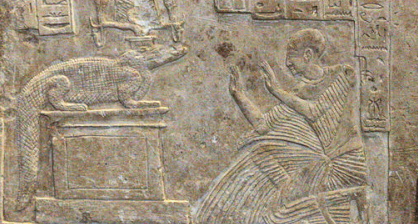
sobek

Around 300 BCE, there lived in Egypt a man called Thamista. When his bronze pot was stolen, one of the town folk, suspicious of Thamista decided to seek the help of Sobek, the crocodile god. On a piece of papyrus the owner of the bronze pot wrote, “If Thamista was the man who has stolen my bronze pot, give me this card” and put it along with cards with the names of other suspects. In a ritual in Sobek’s temple, one of these cards was picked and the suspect was found.

When archaeologists found papyri like these, they all mentioned a town called Tebtunis which was no where to be found. These papyri contained literary texts, records of private contracts, and descriptions of religious acts such as the one involving the crocodile god. This town which was lost in 12th century has now been located.

“The papyri give us particular and historic information that cannot be found elsewhere,” says Claudio Gallazzi, professor of papyrology at Milan University who has led the international effort here since 1988. The papyri and other archaeological finds are painting an ever more detailed picture of life in this ethnically mixed village over a long period of time. For example, Gallazzi says, they show that there was a strong Greek presence in the town at a time when most Greeks in Egypt were thought to have lived only in big cities. They also illuminate the surrounding areas with which Tebtunis interacted and traded. “When we find a treasurer’s registry, I know it contains interesting economic matters from many villages in the Fayum area, not just Tebtunis. And when we find religious documents, we can understand more about previously unrecognized religious-magic rituals [surrounding the crocodile god] pertinent to all of Egypt,” he adds.[Letters to the Crocodile God]

Solved: A Murder Mystery

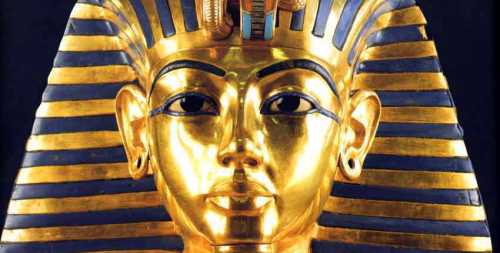
kingtut

Tutankhamun, the Egyptian Pharoah was not famous during the 11 years he lived during the time of Egypt’s New Kingdom. (The previous two eras are creatively named Old Kingdom and Middle Kingdom). He became famous about 3000 years after his death when Howard Carter discovered his intact tomb in 1922.  One unanswered question that still remains is the cause of his death.

Since Jerry Bruckheimer and the CSI series were not present in 1922, investigators had to wait till 1968 when an X-ray revealed that he could have died of a blow to his head. It was suggested that he was murdered and as if coming right out of a soap opera it was also suggested that possible candidates included his wife and chariot driver.

We don’t have to wait till Tehelka conducts a sting operation on the dead chariot driver, for new studies show that it could have been a hunting accident.

“He was not murdered as many people thought. He had an accident when he was hunting in the desert. Falling from a chariot made this fracture in his left leg and this really is in my opinion how he died,” said Zahi Hawass, general secretary of Egypt’s Supreme Council of Antiquities.

Until now, many historians had assumed that he was treated as a rather fragile child who was cosseted and protected from physical danger. However, Nadia Lokma of the Cairo Museum said that a recent analysis of the chariots found in the tombs of the pharaohs indicated that they were not merely ceremonial but show signs of wear and tear. Hundreds of arrows recovered from the tomb also show evidence of having been fired and recovered. “These chariots are hunting chariots, not war chariots. You can see from the wear on them that they were actually used in life,” Dr Lokma said. [Tutankhamun died in a hunting accident]

What Math?

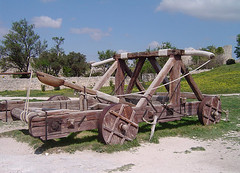
Replica_catapult

If venture capitalists existed in the fifth century BCE, they would have invested in the catapult building enterprise without much thought. Social networking was not the big thing then.

The invention of the catapult had a major impact on ancient warfare and it was assumed that the catapult builders knew the principle behind the steelyard balance. Turns out that the catapult was built around fifth century BCE and Archimedes and other mathematicians of the Hellenistic era (time from Alexander’s death to the defeat of Cleopatra) came up with the theory, some 200 years later.

“They didn’t all go to Plato’s Academy to learn geometry, and yet they were able to construct precisely calibrated devices,” Schiefsky said, adding that craftsmen combined some improvisational trial and error with years of practice to make their machines functional.

The steelyard, which used unequal arms and weights to weigh items, was one device in use well before the advent of the math that explained it. It was a simple case of necessity being the mother of invention, with things like meat needing to be weighed and some method required to do so, Schiefsky said.

Athenians also understood the mechanics behind a basic pulley system well before Archimedes came along and invented the compound pulley, which the Greeks famously used to hoist and topple enemy ships during battles at sea. [Catapults Invented Before Theory Explained Them]

The only help mathematicians provided was to make the catapult more precise so that if an Epicurean wanted to fling a projectile on a Stoic’s head he could do so with precision.

Saving the Mandeans

johnbaptist
Geertgen tot Sint Jans (15th century): “John the Baptist

In the Christian Gospels, there is an interesting episode when the pregnant Mary, the mother of Jesus goes to meet her cousin Elizabeth, who herself is pregnant with the child who would later be known as John the Baptist. In Luke (1:44) Elizabeth tells Mary, “As soon as the sound of your greeting reached my ears, the baby in my womb leaped for joy”, because the baby knew that he was in the presence of the Messiah.

In his lectures on the Historical Jesus at Stanford University, Prof. Thomas Sheehan tells that such bits were added by Christian writers to emphasize that Jesus was the Messiah. Jesus never thought of himself as the Messiah, but as we move forward in time, we can see the scriptures being written to make it appear that way.

According to Paul, who wrote in 50 CE, about 20 years after Jesus’ death, Jesus became a Messiah after his death when he was taken by God, but according to Mark who wrote in 70 CE, Jesus became a Messiah when he was dunked in river Jordan by John the Baptist. As per Luke, who wrote much after Mark, Jesus is the Messiah from the moment he was in the womb.

According to the Gospels, the ministry of Jesus starts when he is baptised by John. In fact, Jesus hears about John, goes to river Jordan and asks that he be baptised. After that John takes Jesus under his tutelage and becomes his teacher. This became a problem for later Christians because it looked odd when the Messiah became a student of John, so the texts were modified to make John say that he is not the Messiah and someone would come after him. This also accounts for the happiness of the baby John in the uterus.

While John the Baptist is considered a prophet by Christianity, Islam, and the Bahá’í Faith, Mandeans, a minority community in Iraq consider him to be God’s most honorable messenger. Besides that they think Jesus was a “false messiah” who perverted the teachings of John the Baptist. The Mandeans also believe that Abraham, Moses and Mohammad were also false prophets, but recognize some figures from the monotheistic religions like Adam, Noah, etc.

Now with the war in Iraq, the Mandeans and their 2000 year old culture is facing extinction.

The Mandeans are the only surviving Gnostics from antiquity, cousins of the people who produced the Nag Hammadi writings like the Gospel of Thomas, a work that sheds invaluable light on the many ways in which Jesus was perceived in the early Christian period. The Mandeans have their own language (Mandaic, a form of Aramaic close to the dialect of the Babylonian Talmud), an impressive body of literature, and a treasury of cultural and religious traditions amassed over two millennia of living in the southern marshes of present-day Iraq and Iran.

Like their ancestors, contemporary Mandeans were able to survive as a community because of the delicate balance achieved among Iraq’s many peoples over centuries of cohabitation. But our reckless prosecution of the war destroyed this balance, and the Mandeans, whose pacifist religion prohibits them from carrying weapons even for self-defense, found themselves victims of kidnappings, extortion, rapes, beatings, murders and forced conversions carried out by radical Islamic groups and common criminals.

Mandean activists have told me that the best hope for their ancient culture to survive is if a critical mass of Mandeans is allowed to settle in the United States, where they could rebuild their community and practice their traditions without fear of persecution. If this does not happen, individual Mandeans may survive for another generation, isolated in countries around the world, but the community and its culture may disappear forever.[Save the Gnostics ]
What Christian Nation?

When Rajan Zed, director of interfaith relations at a Hindu temple in Reno, Nev., gave the brief prayer that opens each day’s Senate session, his prayer was disrupted by some anti-abortion activists who shouted “No Lord but Jesus Christ”, “There’s only one true God,” and ”this is an abomination.” 

Representative Bill Sali from the “wide-stance state” too was upset about this and wrote an article in which he did not want principles outside the Judeo-Christian tradition to be promoted in the Congress. According to Rep. Bill Sali, United States was founded on the principles found in the Scriptures and the future of United States should depend on the Judeo-Christian convictions of the founding fathers.

Senator John McCain, ran as the maverick politician in 2000, but in 2007 he is looking more like the mango peel. To boost his campaign he has decided to suck upto the evangelicals whom he once called “agents of intolerance” and “corrupting influences.” He too declared that the constitution established the United States of America as a Christian nation.

In an op-ed piece in New York Times, Jon Meacham sets the record straight.

The only acknowledgment of God in the original Constitution is a utilitarian one: the document is dated “in the year of our Lord 1787.” Even the religion clause of the First Amendment is framed dryly and without reference to any particular faith. The Connecticut ratifying convention debated rewriting the preamble to take note of God’s authority, but the effort failed.

In the 1790s, in the waters off Tripoli, pirates were making sport of American shipping near the Barbary Coast. Toward the end of his second term, Washington sent Joel Barlow, the diplomat-poet, to Tripoli to settle matters, and the resulting treaty, finished after Washington left office, bought a few years of peace. Article 11 of this long-ago document says that “as the government of the United States is not, in any sense, founded on the Christian religion,” there should be no cause for conflict over differences of “religious opinion” between countries.

The treaty passed the Senate unanimously. [A Nation of Christians Is Not a Christian Nation]

At present it looks like Rudy Giuliani, a man who supports abortion rights, would be the presidential nominee of the GOP and the evangelicals have warned that if that happens, they would back a third-party candidate to stop him. Thus sensing an opportunity, McCain has decided to sell his soul to a bunch of folks who literally believe in the Bible, want to prevent stem cell research and think that man was created by God.

This just proves that politicians are all the same, irrespective of whether they are in a developed country or a developing county. They all need to sing and dance for the vote bank.

Doing worse than the U.N.

When Buddhist monks started their peaceful protest against economic mismanagement and political oppression in Burma, the U.N. Secretary General issued a statement asking all parties to avoid provocative actions, thus equating the peaceful monks with the ruthless dictators. As the Burmese protestors got support from around the world, the U.N. sent an envoy, Ibrahim Gambari, to meet with Senior Gen. Than Shwe and pro-democracy leader Daw Aung San Suu Kyi.

Just after Ibrahim Gambari briefed the Security Council and reported that he saw a window of opportunity for talks between the junta and Suu Kyi, the junta reduced security in Yangon. The state television broadcast Suu Kyi’s images, referred to her respectfully as Daw Aung San Suu Kyi and released monks and demonstrators, all of which are unusual.

President Bush, it seems asked the China’s foreign minister Yang Jeichi to talk to the generals privately and it was this intervention that facilitated the visit from the U.N. envoy. Following this, the senior U.S. envoy was invited by the military regime for bilateral talks and she is expected to ask the junta to start talking to the democratic opposition groups.

While China, United States and even United Nations is involved in bringing a transition in Burma, India is absent from the diplomatic effort. When the U.N.  is doing more than us, it tells a lot about how much influence or lack of influence we have in our neighborhood. 

Betraying Buddhists Again

Free Burma! 

In 2002, when India and Pakistan appeared to be headed for a war, Colin Powell, the U.S. secretary of state  played a key role in cooling down the tensions. Apparently a significant part was also played by India’s huge software and information technology industry which asked the government to tone down the rhetoric. No one could have put it better than the metaphor maestro, Tom Friedman who wrote, “That’s right — in the crunch, it was the influence of General Electric, not General Powell, that did the trick.”

While business interests can avert wars, it can also cause nations to support dictators and be mute spectators to genocide. In 2006, when United States and its European partners wanted United Nations to pass a resolution to allow UN peace keepers in Darfur, it was opposed by China. China has leverage with the Sudanese government due to the vast investments in Sudanese oil fields, but has always withstood putting pressure on them. Chinese oil purchases have supported the regime and Chinese made AK-47s are used as the murder weapon in Darfur.

It is not just China which behaves like this. The main opposition to the Iraq war came from Russia, France and Germany who all had lucrative deals with Saddam Hussein. Our own Natwar Singh took kick backs and faked a moral opposition to the war.

With the protest of the Burmese Buddhist monks getting attention from around the world, analysts have concluded that if there is one nation that can exert pressure on the military junta, it is  China. China is Burma’s largest trading partner and has the leverage, but it is a foregone conclusion that China will do nothing to help the monks. A nation which suppressed the Tiananmen revolution and brutally murdered Buddhist monks in Tibet would be least interested in bringing democracy to Burma. When the issue was bought up before the United Nations, China protested, similar to the protest in Darfur case.

Occasionally there is a mention that India could do something about the issue in Burma, then it as hilarious as the suggestion by one of the callers on On Point Radio, who said that all Americans should write to Wal-Mart asking it to do something about the freedom struggle in Burma. While the world was watching, India chose to be as insensitive as possible by sending the petroleum minister Murli Deora for business talks. Pranab Mukherjee went one step further and requested the murderers to conduct an enquiry into their own activities which  is like asking Veerappan do his own post mortem.

Both India and China are least bothered about the plight of the monks and the human tragedy in Burma. Out of this, India’s behavior is shameful as it is a democracy selling arms to a cruel dictatorship in return for access to oil and gas.  When China brutalized Buddhists in Tibet, India kept quiet and now probably to show that the foreign policy is consistent, it is keeping quiet when the show is being repeated in Burma. This was an opportunity for India to take a moral stand and distinguish itself from China, but instead it has chosen to let General Electric run the show.

(Image via Free Burma)

Notes from Kerala (3)

kerala-river

Bhaskar writes about the Communist Government in Kerala

This government cannot be saved by saving the ministers concerned. So far no member of this administration has been able to gain recognition as a good minister. At the same time, the parties say they are satisfied with the ministers’ performance. Apparently, although the ministers have not been successful in addressing the people’s problems, they are meeting the party’s needs.

Akrami writes, again about the Communist Government in Kerala

Every hour passed with the comedy government in power will prove costly for the LDF and will soon see a coming back of the vicious minority lobbies. Atchuthanandan it seems has vowed to see the end of the LDF. Democracy itself needs changes that able people come to power, manage the state’s resources. But for now a better team needs to take charge. This small state with not a kilometre of normal roads, not a urinal around, not public transport, with only pety issues and petty politics cannot stand watching further. Before they are kicked out without grace let them leave and make way for better people.

Ratheesh writes how people of Kerala are resorting to Gandhigiri to stop hartals

From one of my relatives, I came to know about this Gandhian model campaign in Kerala against “Hartal”. Campaign for Peace is an NGO that plans to send a lakh postcards to the Chief Justice of the Kerala High Court requesting him to ensure safety of people during Hartal days. The plan is to send postcards on October 2, which is going to be observed as Hartal Viruddha Dinam (Anti-Hartal Day). Why not e-mails? I think it’s because e-mails are not frequently read in many Government organizations in India, and having an email flood in the Inbox would hardly have any impact anywhere. But making a lakh postcards pile up in the mail-room would be a more effective form of symbolic protest.

See Also: Notes from Kerala, Notes from Kerala (2)

The Buddha loses

Nitin, you were right. They came back.

MINGORA: Some unidentified militants blew up the historic statue of Buddha in Jihan Abad area of Swat district on Saturday.

The curator maintained that the statue belonged to 7th century A.D, and it was the most complete and inspiring symbol of Gandahara art. After the historic statues of Bamyan in Afghanistan, which were destroyed by the Taliban, the swat statue was the sole example of Buddhist cultural heritage.

“It was seven meters tall and 20 feet high from the land, showing Buddha in the condition of meditation. I don’t know what they want to achieve by such actions,” he added. Aqleem said he had reported the incident to the local police but he did not think that the police would be able to protect Buddhist cultural sites in swat as they themselves were the victims of terrorist attacks.[Militants blow up Buddha statue in Swat]

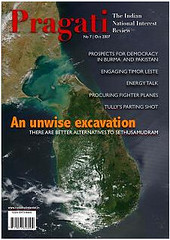
Epic Problems: My article in Pragati

pragati-oct2007
In an affidavit pertaining to the Sethusamudram project, the Central government told the Supreme Court that there was no historical evidence to establish the existence of Lord Rama or the other characters in Ramayana. The affidavit was filed by the Archaeological Survey of India (ASI), an organization under the Ministry of Culture, whose goal is to conduct archaeological research and protect India’s cultural heritage. This caused an arc of outrage and a political crisis. To control the political damage, the Congress-led United Progressive Alliance (UPA) government withdrew the affidavit and suspended the concerned ASI officials. This makes sense, not so much for shielding the Minister for Culture, but for making unwarranted statements about the historicity of Rama.
Read the rest at the October 2007 (Community Edition) of Pragati.
The Community Edition of Pragati is available for free download and this edition may be freely distributed (in its complete form) via both electronic and non-electronic means. You are encouraged to share your copy with your local community or social networks.