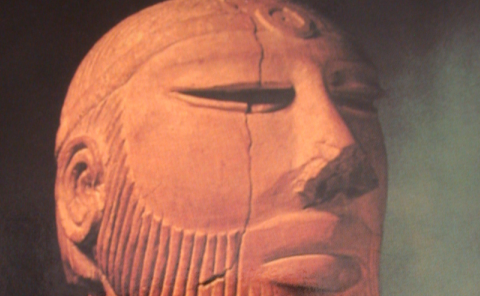
John Marshall and Indus Valley

harappa-priest

When the 18th century Europeans started studying Indian history they found that the culture was ancient and it was accepted at face value. According to A. L. Basham, their goal was to link Indians with descendants of Noah and vanished empires of the Bible. Father Johann Ernst Hanxleden who worked in Kerala from 1699 – 1732 compiled the first Sanskrit grammar in European tongue. But it was Father Coeurdox who recognized in 1767 that Sanskrit was related to European languages and suggested that Brahmans of India were descended from one of the sons of Japhet.

Sir William Jones came to Calcutta in 1783. He rejected the view that languages like Persian and Sanskrit were derived from Hebrew. Another Englishman, Charles Wilkins learned Sanskrit and translated the Bhagavad Gita and Hitopadesa while Jones translated Sakuntala and Gita Govinda. Jones and Wilkins were followed by others who translated Sanskrit literature which generated great interest in Europe. In 1837 James Prinsep, an official at the Calcutta Mint interpreted the Brahmi script and was able to read the edicts of Asoka.

While all this was happening archaeology was non-existent in India.  It started in large scale in the 20th century thanks to Lord Curzon who appointed a young archaeologist named John Marshall as the Director General of the Archaeological Survey. For the first time ancient cities started being discovered and John Marshall’s greatest achievement was the discovery of the Indus Civilization.

A new book, Finding Forgotten Cities: How the Indus Civilization was Discovered, tells the story of how Marshall was able to make his discovery.

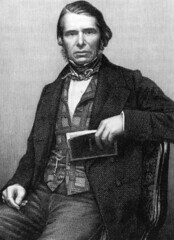
John Hubert Marshall (1876-1958) was a Cambridge man trained in archaeology in the eastern Mediterranean region and was lucky to come to the notice of the new viceroy, Lord Curzon. He was to have the longest tenure at the head of the archaeology department in India, discovering almost all the sites from Harappa to Taxila that later received additional profile through comparative studies. Before him, Alexander Cunningham, the first director-general of the Survey in India, had obtained seals and coins — the coins were never found — from Harappa from odd travellers. He was inclined to connect them with the Buddhist legacy he had known, just as Marshall was inclined to connect them to the Mediterranean region.

Marshall’s assistants have to be mentioned because he himself didn’t go to the digs. Daya Ram Sahini, an expert on ancient Sanskrit, did excavation in 1921 and rendered its first account under the Survey. Rakhaldas Banerji was another famous epigraphist, rated highly by Marshall as a potential ‘reader’ of the Harappa script, worked on the project. There was Madho Sarup Vats too who dug at Mohenjodaro and first reported that it was an extension of the Harappa culture. The book also contains the story of Luigi Pio Tessitory, the incredible Italian linguist, who explored the quiz of Kalibangan by excavating Harappan seals from there, and lies buried in Bikaner today.[Book review: John Marshall and Harappa —by Khaled Ahmed]

The discovery of Indus civilization proved to the Europeans that India had a rich civilization as old as the Egyptian and Mesopotamian ones, but then there was a rush to prove that the people of Indus Valley did nothing important and whatever we hold as sacred came from Noah’s children. You all know that story.

Technorati Tags: , ,

Powered by ScribeFire.

Underwater Archaeology in India

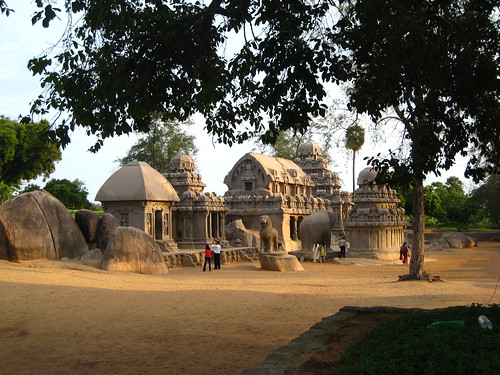
mahabalipuram

The article gives a brief over view of the under water archaeology efforts in Dwaraka and Mahabalipuram

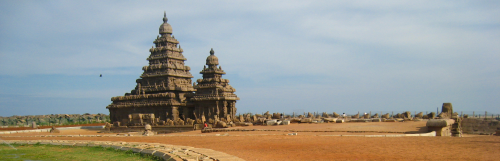
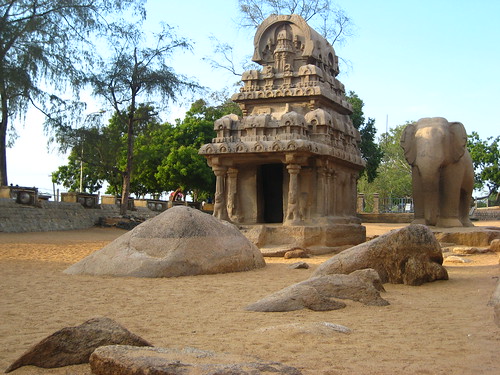
Another significant discovery has been at Mahabalipuram. For years, this ancient port town, off the Tamil Nadu coast was known to sailors as the town of seven temples. Present day Mahabalipuram, however, has only one shore temple. The popular belief is that there were six more temples here, which later got submerged.

Excavations by NIO in 2002 revealed some amount of truth in these tales. According to Vora, underwater investigations showed the presence of the remains of walls as well as large stone blocks, which seemed to correspond to the time period of the surviving shore temple. Excavations carried out by ASI in 2005 also revealed the remains of two structural temples, found near the shore temple.

”These findings provide prima facie evidence about what was earlier regarded as merely folklore,” says Vora. Folklore and legends in fact, have the potential to provide many clues which help in underwater archaeology, a field whose scope, incidentally, is not merely limited to the sea, but extends beneath all water bodies. [Silent secrets of the sea]

Macaulay's Education Part 4: The Consequences

MacaulayLetter
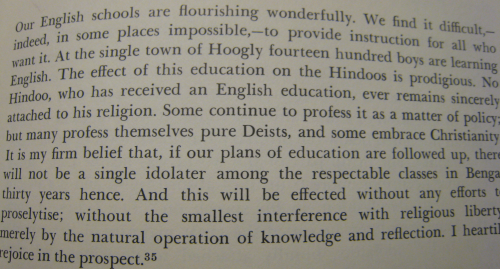
Macaulay’s letter to his father

When Macaulay landed in India, the British were debating on the language to be used for higher education in India. On the one side there were the Anglicists and evangelicals who wanted English for political and religious reasons and on the other side there were the Orientalists who wanted to use Sanskrit, Persian and Arabic. With his  Minute, Macaulay ended the debate.

The draft prepared by Macaulay would have been signed by William Bentinck without any changes, but on news leaking out that the Government would abolish the Sanskrit College and the Madrassa, thousands of Hindus and Muslims protested. The Government declared that it would not abolish any school and with just a change in the sequence of paragraphs, the order went out. William Bentinck decided that the objective of the British Government had to be the promotion of European literature and science among the natives. He also ordered that the printing of Oriental books should cease at once and no new stipends should be conferred on Oriental colleges.

Though he was a moderate Evangelical, Bentinck too was convinced of the superiority of Western ideas to Indian ideas and institutions. Besides this, economic considerations also led him to the conviction that English was the means by which ideas were to be transmitted in India and he was responsible for replacing Persian (a Mughal hangover) as the official government language and the language of the courts. He also required the use of vernaculars as the language of the lower courts.

Continue reading “Macaulay's Education Part 4: The Consequences”

Macaulay's Education Part 3: The Minute

459px-Thomas_Babington_Macaulay_-_Project_Gutenberg_eText_19222
Thomas Macaulay

Thomas Macaulay arrived in India on June 10, 1834, the same time Charles Darwin sailed the Pacific Ocean on HMS Beagle and one of his first acts as the legal member of the education council was his Minute, that famous document, which defended the views of the Anglicists.

Macaulay was of the opinion that there was no point in perfecting the vernaculars, since there was nothing intelligent, but falsehood in them. In his Minute, he noted that he had no knowledge of Sanskrit or Arabic, but was convinced that a single shelf of a good European library was worth the whole native literature of India and Arabia. On the other hand, whoever learned English had access to the vast intellectual wealth of the wisest nations of the earth and the literature available in English is valuable that the literature of all languages of the world together.

Macaulay did not think that it was British duty to educate the lower classes directly. His goal was to teach the educated class, create what he called “enlightened natives” and get them to diffuse the knowledge to their countrymen. He wanted to combine vernacular with English instruction whenever possible since English language was the avenue by which people of India would arrive at all valuable knowledge. With English, the enlightened native would have access to accurate information on all subjects and could make considerable advances in life.

Continue reading “Macaulay's Education Part 3: The Minute”

Macaulay's Education Part 2: Religious Intolerance

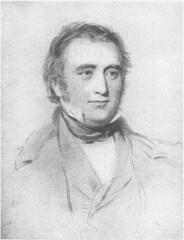
Charles_Edward_Trevelyan
Charles Trevelyan

While economic and political reasons were factors for introducing English education in India by the British,  less mentioned is the fact that most of the Anglicists were also Evangelicals who thought that the arrival of English language would cause the death of Hinduism.

The first signs of dissent came in 1792 from Charles Grant, a British politician and Evangelical, who proposed English education instead of Indian vernaculars mainly as  a way to undermine what he called the Hindu fabric of error. Introduction of English, he reasoned, would show Hindus how absurd their religion was and dispel many of their myths. The spread of English arts, science and philosophy, along with the spread of Christianity, according to Mr. Grant, would enable the Indian people to rise to the level of human beings.

Initially the East India Company maintained a policy of religious neutrality even denying permission to missionaries to work in the country. When the charter of the East India Company came for renewal before the Parliament in 1813, the Evangelicals, including Zachary Macaulay, father of Thomas Macaulay, had become influential as to add a provision allowing missionaries to enter the country legally, as well as provide public funding for Indian education. The wording of this Charter Act of 1813 would be subject to intense scrutiny by Thomas Macaulay during his time in India.

Continue reading “Macaulay's Education Part 2: Religious Intolerance”

The Story behind Macaulay's Education Policy: Part 1

Hastings
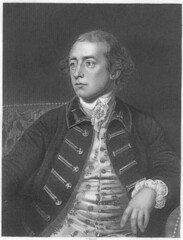
Warren Hastings

Raima Sen, more popularly known as Moonmoon Sen’s daughter, recently gave an insight into the word “modern upbringing”. She said that they didn’t do pujas at home, spoke English not Bengali and most of her friends were Anglo-Indian. If Thomas Macaulay were alive today, Raima Sen would be the kind of enlightened native he would want to be working in the British Administration.

In 1834, there was a controversy in British India over the language to be used for Indian higher education. On the one side there were the British Orientalists who wanted to use Sanskrit, Persian and Arabic and on the other side there were the Anglicists who had this Raima Sen type scorn for Oriental languages and Indian culture and wanted to enforce English. Macaulay landed in India at the height of this debate and soon published is famous Minute, which sealed the case for the Anglicists. Macaulay thus became immortalized, with natives who exhibit contempt for their culture being labeled Macaulay’s Children.

The significance of Macaulay’s Minute, the drama behind the decision and the consequences of the decision can be understood better by taking a look at the Orientalist-Anglicist controversy, the attitude of English towards Indian culture, the role of Evangelicals in the decision making process and asking the question: Who the heck was Charles Trevelyan?

India before Macaulay

Warren Hastings, the first governor-general of India from 1773 to 1785 had a respectful view of India and wanted the Englishmen to learn the language and culture and blend in. Hastings found the Calcutta Madrassa for training Muslims in Islamic Law and Jonathan Duncan found the Sanskrit College in Benares for the preservation and cultivation of the Hindu laws, literature and religion. In the College of Fort William in Calcutta, the employees of the East India Company had to learn Arabic, Persian, Sanskrit, six Indian vernaculars, Hindu, Muslim and English law before being appointed as judges, officials and administrators. The college had the patronage of Orientalists like Sir William Jones, best known for his observation that Sanskrit bore resemblance to Latin and Greek and James Prinsep, who deciphered Asoka’s inscriptions.

Continue reading “The Story behind Macaulay's Education Policy: Part 1”

Women in Ancient India

Manusmrti says ‘na stri swatantryam arhati’ and this means that all
Indian women lack freedom to do anything. From my college days I have heard
speeches by members of the
treasonous
Communist Party and affiliated historians who have used such generalization to
put down Indian culture. In an article in Indian Express, Nanditha Krishna
explains some of the achievements of women of ancient India, you know, the ones
who did not have freedom.

Seventeen of the seers to whom the hymns of the Rig Veda were revealed were
women — rishikas and brahmavadinis. They were Romasa, Lopamudra, Apata, Kadru,
Vishvavara, Ghosha, Juhu, Vagambhrini, Paulomi, Jarita, Shraddha-Kamayani,
Urvashi, Sharnga, Yami, Indrani, Savitri and Devayani. The Sama Veda mentions
another four: Nodha (or Purvarchchika), Akrishtabhasha, Shikatanivavari (or
Utararchchika) and Ganpayana. This intrigued me so much that I had to learn
more about them, but I drew a blank. Who were these wonderful women who were
on par with their men and produced the greatest and longest living literature
of the world?

In the Vedic period, female brahmavadinis (students) went through the same
rigorous discipline as their male counterparts, the brahmacharis. The
Brihadaranyaka Upanishad describes a ritual to ensure the birth of a daughter
who would become a pandita (scholar). The Vedas say that an educated girl
should be married to an equally educated man. Girls underwent the upanayana or
thread ceremony, Vedic study and savitri vachana (higher studies). Panini says
that women studied the Vedas equally with men. According to the Shrauta and
Grihya Sutras, the wife repeated the Vedic mantras equally with their husbands
at religious ceremonies. The Purva Mimamsa gave women equal rights with men to
perform religious ceremonies. Vedic society was generally monogamous, and
women had an equal
place.[The
equals of men
]

Once again we converge to the era that Pratibha Patil mentioned

Islamic rule in North India saw a sharp decline in the status of
women, now relegated to the veil, both as an influence of the new dispensation
as well as for their personal protection. Jauhar protected Rajput women from
captivity. If women came out of the confines of the home, the new court culture
made them either entertainers or chattels, both highly degrading positions.
Thousand years of the purdah was to have a highly detrimental effect on women,
something from which the northern states have yet to
recover.[The
equals of men
]

Next time someone talks about Manusmriti, ask
them  about the status of women as mentioned in the Brihadaranyaka
Upanishad and Purva Mimamsa and chances are they would know nothing about it.

Lifting the veil

Pratibha Patil, the virtual unknown, whom Sonia Gandhi picked up as the candidate for the President of India just to shut up Prakash Karat has established an albatross-neck relationship with the Congress Party. Her blame on the origins of the purdah system on Mughal invaders has created a new job position in the party for a Shane Warne level spin master. This statement by a candidate of a party which has been trying to white wash Indian history for the past half a century has upset all the secular fundamentalists.

The ultimate secular cuss word was used – pro-RSS. Her views were found to be similar to those of Hindu fanatics. Clueless newspapers like Deepika (Malayalam) said that Ms. Patil should not have made irresponsible statements (statements which affect vote bank) and provided the convincing argument that even the Congress spokesman disagreed with her, while in fact the Congress spokesman Param Navdeep said that it was an established fact that women were a target of aggression during the Mughal rule.

Eminent historians were immediately called into action by beaming the bat signal into the night sky.

Nandita Prasad Sahai, who teaches a course on the gender history of medieval India in JNU, says that there is
no consensus amongst historians about the precise period when purdah originated in Indian society.

“Historian Kegan Paul traces the practice of the custom back to the Vedic period. And anthropologist Patricia Jeffrey says that seclusion and veiling of women was not unknown before the Muslim invasion. It appears that a social ideal recommending women to remain in seclusion to mark their complete loyalty towards their husband already existed,” she says.

“Most historians consider the Muslim invasion as a watershed when purdah is said to have become more widespread as a defensive reaction in troubled times among the Rajput royalty trying to protect their women. In fact, the case is unproven in the absence of statistical material that could establish a change in the extent of the practice of purdah . It seems plausible, however, that the practice became more widespread amongst the Rajput royalty in trying to imitate the custom of the new ruling classes,” says Sahai. [Experts lift veil off purdah origin]

Trying to push it back to the Vedic period is a nice JNU trick, but then facts disagree.

Some months ago, I recall a North Indian lady talking about the cultural differences she experienced when in South India. Visiting relatives posted in Kerala, she made a pilgrimage to the famed Shri Krishna shrine in Guruvayur. Upon entering the temple she devoutly covered her head — only to be sternly reprimanded by a priest who told her that this was against Hindu conventions.

The temple guardians at Guruvayur were quite right. I don’t know how many readers would have stepped into the National Museum in Delhi (sadly ignored by most visitors to the capital). The wealth of treasures in the museum is so great that it has actually spilled out into the lobby. One of the first pieces of sculpture you can see — before coming even to the ticket office — is a marvellous statue of the goddess Saraswati, from the Chauhan period as I recall.

The goddess of wisdom is portrayed without any covering on her head. So are depictions from thousands of years of Indian history, from the dawn of civilisation on the banks of the Sindhu through the Mauryas, the Guptas, and other dynasties. But as time passes — and you enter the galleries showing Rajput miniatures from later periods — the veil makes its appearance, until even Adishakti Parvati has her face partly covered.[The debate over Muslim separatism in the US]

While the Mughal era started in the 16th century, the Muslim invasion started much earlier with the invasion by Mahmud of Ghazni against the Rajput kingdoms and rich Hindu temples like Somnath, Varanasi and Dwaraka in the late 9th century. In the last quarter of the 12th century, Muhammad of Ghor established the Delhi Sultanate and sometimes the word Mughal rule is used incorrectly in a broader sense to include the Turkish and Afghan rulers as well

One more attempt was made to push the date of the purdah system to pre-Muslim era by Vasha Joshi of Institute of Rajasthan Studies who suggested that the veil was prevalent in Rajasthan during the 11th century, much before the Delhi Sultanate. This remark was based on the existence of separate quarters for women called the jenani deorhi in medieval Chittorgarh fort which in no way implies the existence of the purdah system.

The Gandhara sculptures show women with band like head gear, but even that cannot be called the veil. Face covering was completely absent in India till the 11 -12th century and they are not present in the Ajanta paintings. Slowly the head covering starts appearing with the arrival of Muslims with a 1250-1275 book in Jaisalmer showing a woman covering the back of the head using the sari.

Pratibha Patil did nothing wrong, but stated a historical truth. Her only mistake was that she picked the wrong community to blame. Instead, if she had blamed the caste system or denounced Brahmins, it would have been accepted without debate that she was the person with the perfect secular credentials to be the President of India.