The arc of civilization

jiroft.jpg

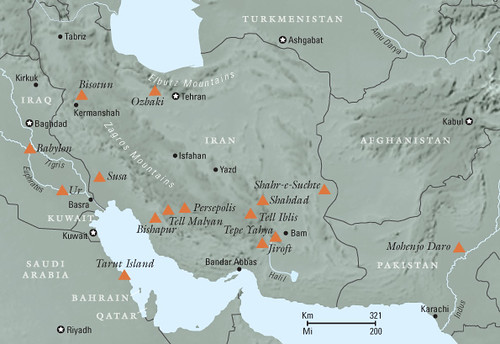
In South Eastern Iran, near the city of Jiroft,
archaeologists
uncovered the remains of a large wealthy city some time back
. This city
which would have existed around the time of the Harappan civilization was more
than 2 square kilometers and was dominated by a large fortress for protecting
the town.

In one of the tombs, there were burial chambers in which beads and other
precious materials were scattered around. Lapis and turquoise beads, chlorite
and copper vessels were found indicating that the residents were affluent.
While pottery from one site was dated 4000 B.C.E, researchers found a bustling
metropolis nearby dated 2550 – 2400 B.C.E.The affluence of the residents of
this site came from trade. Archaeologists have found lapis from Afghanistan,
shells from Pakistan, vessels from Indus and game boards from Ur in this city.

In the ancient globalized world merchandise from one part of the world used to
be available in another part thanks to these trading posts on the way. Thus if
someone in Mesopotamia or Indus wanted copper from Oman he could get it. If a
housewife in Central Asia wanted an Omani pot to crack on her husband’s head it
would be available in the market. Indus and Mesopotamian seals have been found
in Turkmenistan along with Iranian goods.

The different cities excavated have revealed that they all did not have a
monolithic culture, but they had their own individuality with their own pottery
styles and art.
Three
tablets discovered in the cities
had unique iconography and there is debate
on if it was really a writing system.Unlike the ancient civilizations, the one
around Jiroft is not around a river or near the ocean and so it is believed that
bullock carts and camels were used in the over land trade route.

Previously only the civilizations around the Tigris and Euphrates, Nile
and the Indus were mentioned as ancient civilizations.
While Mesopotamia is usually called the cradle of civilization, the
discovery of places like the ancient cities near Jiroft has led to an
expanded
view of the origin of civilization
. According to the new view, many
urban centers existed along the arc from Iraq to India and these trading
communities  adopted the technologies, architectures and ideas from other
civilizations.

Discovering common ground with Jews

Even though India had issues recognizing Israel, there were
no
second thoughts about asking Israel for help
during the wars with China
and Pakistan. Even when the
Palestinians
had no issues with India recognizing Israel
, we chose to be more catholic
than the pope. Fortunately people outside the country are establishing close
relationship with the Jews and learning quite a bit from them.

Much of that synergy is happening in the Bay Area, where Hindus and Jews
have been coming together to network, talk politics, share dance steps and,
yes, get married. Hindu and Jewish groups estimate there are about 300,000
Jews and upward of 200,000 Hindus living in the Bay Area. Community leaders
acknowledge the two groups have a lot in common: a shared emphasis on
family, faith and education; homelands that are young democracies with a
history of foreign occupations; and, especially in the Bay Area, high
visibility in the tech industry.

But by far, they said, the strongest force behind the friendship has been
the growing ties between India and Israel — two countries with a history of
hostile relations with their Muslim neighbors.

They’ve also been willing to rally to one another’s side. When protesters
disrupted the first-ever Hindu prayer to open the Senate’s daily session in
July, Jews stood alongside Indians in decrying the incident. And when Bay
Area Jews face off against protesters in San Francisco calling for people
and businesses to dump their Israeli assets, they’re not alone.

“When we stand out there counter-protesting, we found that members of the
Hindu-American community always stand shoulder to shoulder with us,” said
Lisa Cohen, who has taken part in a number of rallies and protests. That
friendship, she added, is just going to get stronger. “They have been there
with us through thick and thin,” she said, “and the more I’m around them,
the more I find that we have so much in common.”
[Jews,
Hindus in Bay Area discover common ground
]

A Roman footprint

hobnailed

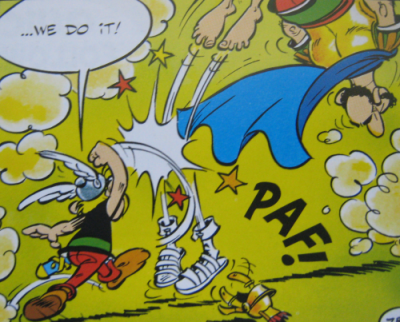
Remember what happens when Asterix and Obelix meet the Roman Army? While the soldiers go flying up, their sandals remain on the ground. Recently a foot print made by one of those Roman hobnailed sandals, immortalized by Goscinny and Uderzo, have been found in a wall surrounding the city of Sussita in Northern Israel.

The city of Sussita is located east of lake Kinneret, which is more famous by the biblical name, Sea of Galilee. It was around the Sea of Galilee where Jesus preached, recruited four of his apostles and the Sermon on the Mount was given on a hill overlooking the lake. The city was destroyed in 749 CE by an earthquake.

There is no precise date for the foot print, but it is believed to have been made when Romans ruled the region, such as during the time of Jesus. In fact, this is not the first such foot print as well; that credit goes to the one found in Hadrian’s wall in Britain.

There are two theories for the origins of this foot print.The region around Israel was an outpost of the Roman empire and most of the construction projects were run by the cities themselves and not the Roman imperial system. One theory says that legionaries or former legionnaires would have participated in the construction of the wall. We don’t know if the legionary groaned, “Join the army they said. It is a man’s world they said!”.

The second theory says that the sandal owner could have been someone who left active service and never returned his military equipment. The basis of this theory is an inscription by two residents of the city of Sussita who had left Roman military service.

Macaulay's Education Part 4: The Consequences

MacaulayLetter
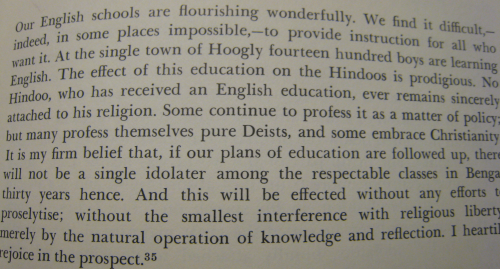
Macaulay’s letter to his father

When Macaulay landed in India, the British were debating on the language to be used for higher education in India. On the one side there were the Anglicists and evangelicals who wanted English for political and religious reasons and on the other side there were the Orientalists who wanted to use Sanskrit, Persian and Arabic. With his  Minute, Macaulay ended the debate.

The draft prepared by Macaulay would have been signed by William Bentinck without any changes, but on news leaking out that the Government would abolish the Sanskrit College and the Madrassa, thousands of Hindus and Muslims protested. The Government declared that it would not abolish any school and with just a change in the sequence of paragraphs, the order went out. William Bentinck decided that the objective of the British Government had to be the promotion of European literature and science among the natives. He also ordered that the printing of Oriental books should cease at once and no new stipends should be conferred on Oriental colleges.

Though he was a moderate Evangelical, Bentinck too was convinced of the superiority of Western ideas to Indian ideas and institutions. Besides this, economic considerations also led him to the conviction that English was the means by which ideas were to be transmitted in India and he was responsible for replacing Persian (a Mughal hangover) as the official government language and the language of the courts. He also required the use of vernaculars as the language of the lower courts.

Continue reading “Macaulay's Education Part 4: The Consequences”

Macaulay's Education Part 3: The Minute

459px-Thomas_Babington_Macaulay_-_Project_Gutenberg_eText_19222
Thomas Macaulay

Thomas Macaulay arrived in India on June 10, 1834, the same time Charles Darwin sailed the Pacific Ocean on HMS Beagle and one of his first acts as the legal member of the education council was his Minute, that famous document, which defended the views of the Anglicists.

Macaulay was of the opinion that there was no point in perfecting the vernaculars, since there was nothing intelligent, but falsehood in them. In his Minute, he noted that he had no knowledge of Sanskrit or Arabic, but was convinced that a single shelf of a good European library was worth the whole native literature of India and Arabia. On the other hand, whoever learned English had access to the vast intellectual wealth of the wisest nations of the earth and the literature available in English is valuable that the literature of all languages of the world together.

Macaulay did not think that it was British duty to educate the lower classes directly. His goal was to teach the educated class, create what he called “enlightened natives” and get them to diffuse the knowledge to their countrymen. He wanted to combine vernacular with English instruction whenever possible since English language was the avenue by which people of India would arrive at all valuable knowledge. With English, the enlightened native would have access to accurate information on all subjects and could make considerable advances in life.

Continue reading “Macaulay's Education Part 3: The Minute”

Macaulay's Education Part 2: Religious Intolerance

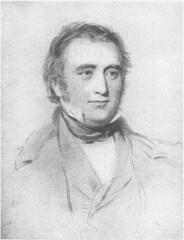
Charles_Edward_Trevelyan
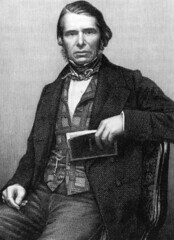
Charles Trevelyan

While economic and political reasons were factors for introducing English education in India by the British,  less mentioned is the fact that most of the Anglicists were also Evangelicals who thought that the arrival of English language would cause the death of Hinduism.

The first signs of dissent came in 1792 from Charles Grant, a British politician and Evangelical, who proposed English education instead of Indian vernaculars mainly as  a way to undermine what he called the Hindu fabric of error. Introduction of English, he reasoned, would show Hindus how absurd their religion was and dispel many of their myths. The spread of English arts, science and philosophy, along with the spread of Christianity, according to Mr. Grant, would enable the Indian people to rise to the level of human beings.

Initially the East India Company maintained a policy of religious neutrality even denying permission to missionaries to work in the country. When the charter of the East India Company came for renewal before the Parliament in 1813, the Evangelicals, including Zachary Macaulay, father of Thomas Macaulay, had become influential as to add a provision allowing missionaries to enter the country legally, as well as provide public funding for Indian education. The wording of this Charter Act of 1813 would be subject to intense scrutiny by Thomas Macaulay during his time in India.

Continue reading “Macaulay's Education Part 2: Religious Intolerance”

The Story behind Macaulay's Education Policy: Part 1

Hastings
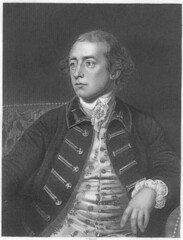
Warren Hastings

Raima Sen, more popularly known as Moonmoon Sen’s daughter, recently gave an insight into the word “modern upbringing”. She said that they didn’t do pujas at home, spoke English not Bengali and most of her friends were Anglo-Indian. If Thomas Macaulay were alive today, Raima Sen would be the kind of enlightened native he would want to be working in the British Administration.

In 1834, there was a controversy in British India over the language to be used for Indian higher education. On the one side there were the British Orientalists who wanted to use Sanskrit, Persian and Arabic and on the other side there were the Anglicists who had this Raima Sen type scorn for Oriental languages and Indian culture and wanted to enforce English. Macaulay landed in India at the height of this debate and soon published is famous Minute, which sealed the case for the Anglicists. Macaulay thus became immortalized, with natives who exhibit contempt for their culture being labeled Macaulay’s Children.

The significance of Macaulay’s Minute, the drama behind the decision and the consequences of the decision can be understood better by taking a look at the Orientalist-Anglicist controversy, the attitude of English towards Indian culture, the role of Evangelicals in the decision making process and asking the question: Who the heck was Charles Trevelyan?

India before Macaulay

Warren Hastings, the first governor-general of India from 1773 to 1785 had a respectful view of India and wanted the Englishmen to learn the language and culture and blend in. Hastings found the Calcutta Madrassa for training Muslims in Islamic Law and Jonathan Duncan found the Sanskrit College in Benares for the preservation and cultivation of the Hindu laws, literature and religion. In the College of Fort William in Calcutta, the employees of the East India Company had to learn Arabic, Persian, Sanskrit, six Indian vernaculars, Hindu, Muslim and English law before being appointed as judges, officials and administrators. The college had the patronage of Orientalists like Sir William Jones, best known for his observation that Sanskrit bore resemblance to Latin and Greek and James Prinsep, who deciphered Asoka’s inscriptions.

Continue reading “The Story behind Macaulay's Education Policy: Part 1”

Understanding anti-Hindusim

When Rajan Zed, director of interfaith relations at a Hindu temple in Reno, Nev., gave the brief prayer that opens each day’s Senate session last month,  his prayer was disrupted by some anti-abortion activists who shouted “No Lord but Jesus Christ“, “There’s only one true God,” and ”this is an abomination”. To understand the hatred of the hecklers, Rajiv Malhotra writes that one should understand that there is a systematic creation and distribution of misinformation by an army of “scholars”.

The denigration of Hinduism influences the way Americans relate to Indians. Andrew Rotter, an American historian, in his book on the US foreign policy’s tilt against India and towards Pakistan during the Nehru era, cites declassified documents revealing US presidents’ and diplomats’ suspicions of Hinduism. They regarded “Hindu India” as lacking morality and integrity, and its “grotesque images” reminded them of previous pagan faiths conquered by Christians, such as Native Americans. American ideas about India are intertwined with stereotypes about Hinduism.

There are domestic implications concerning the diaspora as well. The great American meritocracy has enabled us to succeed as individuals, and many Indians see American Jews as a role model. But it took the Jews over half a century of organized lobbying and litigation by organizations such as the Anti-Defamation League, to establish their religious identity in public life. The lesson Jews had learnt in the European Holocaust was that their individual success could easily be used against them if their civilizational identity was defamed. Indians also faced hate crimes in New Jersey when the Dotbusters targeted Hindus. Recent rants by Pat Buchanan and Lou Dobbs generate xenophobia against Indians for “stealing” jobs from “real” (i.e. white Judeo-Christian) Americans.

As Indian-Americans stand out for their individual success, while US economic standards deteriorate, we may one day regret having neglected the projection of a positive civilizational image. Unlike many other ethnic and religious groups, we have not adequately engaged US universities, schools, media and think-tanks deeper than the pop culture layer of cuisine, Bollywood and fashions. On the contrary, many Indian writers have fed the “caste, cows, curry” images of India. [Was the US Senate Attack on Hinduism an isolated Instance?]

Who killed the Mammoth?

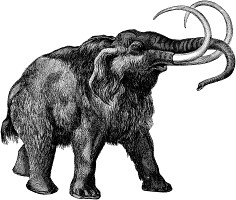
MammouthIf
you get a bunch of archaeologists, geologists, biologists and anthropologists
in a room, you can be sure that it will be one boring party. If you want to
get them charged up, like
Chris
Dodd on O’Reilly Show
, all you need is ask the question: How did Mammoths
become extinct in North America?

Around 10,000 years back something happened in North America which
caused  the extinction of the mammoth, mastodon, horses, camels,
American lions, cheetahs, saber tooth cats and giant bears all of which
roamed around the grasslands from Alaska to Central America.
The
theories for the extinction
of the mammoths and mastodon include a)
hunting by the
Clovis
people
b) rapid change in vegetation due to climate change and c) killer
viruses. Now a new theory states that the cause is a supernova explosion
which
happened 41,000 years ago
.

According to this theory, debris from the supernova fused to form comet like
objects and one such comet may have hit North America, triggering a
cataclysmic event that killed off the vast majority of mammoths and many
other large North American mammals. It was not just the animals that were
affected, for even human activity seems to have ceased around that time.

According to the new theory, 7000 years after the supernova blasts, an
intense blast of iron-rich grains that hit earth and evidence of that has
been found in 34,000 year old mammoth tusks. Then 10,000 years before
present, a 10 KM wide comet hit North America. Analysis of the particles
found at Clovis sites have revealed that their composition is similar to
lunar rocks and other lunar meteorites that fell on earth.

Ancient Indian Rock Music

Usually neolithic rock art sites like
Bhimbetka,
Karabad,
Shamla Hill
, have images of  anthropomorphic figures performing
various activities. The rock art site at Kupgal village in Bellary, Karnataka,
has something more fascinating: dolerite boulders which emit musical tones
when struck by granite. The boulders found on top of hills, which were called
Peacock Hill by the British and Hiregudda (Big Hill) by the locals, have
grooves on them and only when those grooves are struck, music is produced.

The rock art tells us a bit about the people who created them. The most common
object depicted in their art is the Zebus or the the domesticated long horned
humped back Indian cattle. The cattle appear in various images, sometimes
alone, sometimes facing each other and sometimes being hunted by stick figures
with bows and arrows. In some images cattle are shown with three horns and
there is also a depiction of a ritual involving the burning of cow dung.

After cattle, the second most popular image is that of the anthropomorphic
ithyphallic figures, depicted having sex, using bows and arrows, raiding
cattle, riding animals and dancing. Besides this there are images of other
animals like elephants, tigers, deers and symbols like ladder and foot prints.

The location of some of the art is on difficult to reach rock formations
located at great heights and it was definitely not
Jehangir
Art Gallery
for even the viewers had to take risk insurance. The present
locals perform a ritual called Pitlappa Puja in August and during the ceremony
only a few men climb to the top of the hills. One theory is that the rock art
was done as a part of some ritual related to cattle and fertility which
involved music, like the
Shamans.

Reference:
Rock
art and rock music: Petroglyphs of the south Indian Neolithic
,
Ancient
Indians made ‘rock music’