Indian History Carnival – 7

The Indian History Carnival, published on the 15th of every month, is a collection of posts related to Indian history and archaeology.

  1. A recent paper from the Rockerfeller University dated an eclipse mentioned in Odyssey to April 16, 1178 B.C.E. A two part post (1,2) at varnam looks at similar dating of Mahābhārata

  2. Fëanor, in Silk Road Stories, writes about various Indian artifacts that went north.

  3. Vinayak writes about the Fables of Kashmiri Beauty as told by the 17th century French traveler,Francois Bernier.
  4. Guru has a post about M N Srinivas’ Religion and society among the Coorgs of South India. One question the book answers is: How did Hinduism spread all over India without proselytization.?

  5. As the city gets ready to celebrate Chennai day, to commemorate the day in 1639 when the British East India Company transacted the piece of land where Fort St. George stands, Lakshmi says, “what we decide as history is probably nothing compared to the cultural heritage of this city and its various settlements and hamlets put
    together.”

  6. FabbiGabby has pictures of India from a century ago.

  7. Indian Constitution gives us the freedom of speech, but with some constraints. Using two reports from TIME magazine’s archives, Nitin shows why Jawaharlal Nehru introduced the first amendment.

  8. One of Gandhiji’s worldly posession was the Ingersoll ‘Turnip’ pocket watch. Maddy writes about the watch and the role it played in his life.

  9. Kedar writes that Gandhiji’s non-violent struggle succeeded not because it was noble, but because it was a smart move for the time.

If you find any posts related to Indian history published in the past one month, please send it to jk AT varnam DOT org or use this form. Please send me links which are similar to the ones posted, in terms of content.The next carnival will be up on Aug 15th.

See Also: Previous Carnivals

Hampi's North Pole

The Hindu, recently had a feature on Hampi.

From the DVD we know that the city was planned as a microcosm of the Universe, suggesting an equivalence between divinity and kingship. John Malville explores this idea in depth. The principles of Vastu appear to have been used to create a totality, with interlocking relationships between constructed and natural features. Several examples, with detailed measurements, support this argument.

For instance, the Royal Centre is divided into public and private spaces by a north-south axis that passes from the king’s Audience Hall in the east to a palace structure in the west.

Other structures such as the Virabhadra temple atop Matanga Hill are set in a precise alignment with this axis, and if the night sky is viewed from the ceremonial gateway one can see that the north pole of the rotating heavens lies immediately above the tower of the temple. This conjunction between the pole and the axis of the city indicates an astonishing degree of architectural and astronomical sophistication long before the telescope was invented.[New light on Hampi]

If the north pole is right above the tower of the temple, shouldn’t the temple be located at the north pole?

Indian History Carnival – 6

The Indian History Carnival, published on the 15th of every month, is a collection of posts related to Indian history and archaeology.

  1. A recent article in The Mint by Mr. T.R.Ramaswami suggested among other things (a) there is a conspiracy to maintain that Mahābhārata war did not happen between 2500 – 1500 B.C.E (b) 18 day wars could happen only after railways came into existence (c) Valmiki could be a Russian and (d) both Mahābhārata and Rāmāyaṇa took place outside India, on the Russian steppes and were transplanted to India. Eroteme has a response. The Mint also posted a response by me.

  2. Drawing heavily from Kitabu’l-Hind by Al Biruni, kupamanduka unravels the history of xenophobia in India.

  3. How did the Chinese trade with the Malabaris without knowing the language. Maddy explains how fingers talked.

  4. The Battle of Pratapgad was fought between the Shivaji and Afzal Khan in November 1659. Despite having fewer forces, the Marathas got their first significant victory over a regional power and Shivaji became a larger than life person. Kedar says that when people sang about his heroics, they forgot about his strategies.

  5. Amardeep writes what he learned about Shivaji from James Laine’s Shivaji: Hindu King in Islamic India.

  6. Law Matters writes about the administration of justice in Madras in the seventeenth century.

  7. Szerlem looks past the disrepair and ASI’s disinterest in maintaining the Nizamuddin basti in Delhi and catches glimpses of an ancient past.

  8. Shantanu writes about the Gandhi-Bose rivalry.

  9. Pragmatic has a post about the people India and Pakistan sent to argue Kashmir in United Nations and what happened to both at the end.

  10. From Kamasutra to social conservatism – Hari wonders how this change happened.

If you find any posts related to Indian history published in the past one month, please send it to jk AT varnam DOT org or use this form. Please send me links which are similar to the ones posted, in terms of content and don’t send details of your personal temple visits. The next carnival will be up on July 15th.

See Also: Previous Carnivals

Indian History Carnival – 5

Photobucket
(Image by Anoop HA)

The Indian History Carnival, published on the 15th of every month, is a collection of posts related to Indian history and archaeology.

  1. On seeing a critical edition of Mahābhārata, Dr. Arvind Sharma notes that this Western trend is an artificial concept in the Hindu context and the misguided pursuit of Western methodology has created something which never existed.

  2. Anoop has great pictures and a travelogue of Keshava temple of Somnathpur which was constructed in 1268 A.D. by Somnath, a high ranking officer under the Hoysala king Narasimha III and Nanjundeshwara temple of Nanjangud.

  3. Maddy has the amazing tale of John (Joao) Da Cruz, a boy from Calicut in 16th century who achieved the following: Became Zamorin’s envoy to Lisbon, became a horse trader in Travancore, got St. Xavier to convert pearl collecting Paravas of Tuthukudi and finally accelerated the decline of Zamorin’s power.

  4. On a trip to Kolar, the place where everyone used to go for gold, Anitha finds history.

  5. Commenting on the decision by the Reserve Bank of India to launch a Sovereign Wealth Fund, Kiran gives an economic history of the European trade to India in the 16th and 17th centuries.

  6. During the cold war era, Communists and various affiliated organizations used school text books and other literature to indoctrinate people. Nandakumar writes about hagiographies and various falsehoods taught as history. He also shows that various governments have blatantly pursued this path and blaming just one side for bias is not accurate.

  7. Breaking News Online has a list on what they think are 25 “most” significant events in India (post-Independence).

If you find any posts related to Indian history published in the past one month, please send it to jk AT varnam DOT org or use this form. The next carnival will be published on June 15th.

See Also: Previous Carnivals

Indian History Carnival – 4

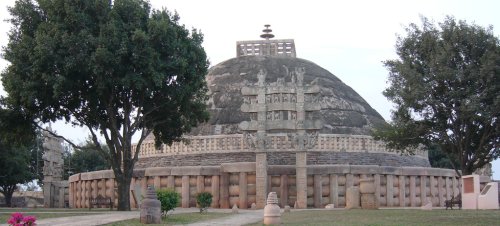
sanchi
(Image of Sanchi stupa by spaceppl)

The Indian History Carnival, published on the 15th of every month, is a collection of posts related to Indian history and archaeology.

  1. Manjunatha looks at genetic data and concludes: “This is the precise reason I believe the Dravidian languages are part of South India since the beginning.”

  2. The Governments of Haryana and Rajasthan have decided to revive the Ghaggar river system. Suvrat Kher clarifies the geological understanding regarding the river Ghaggar /Saraswati.

  3. Sigrid Harris writes about the rise and fall of Buddhism in India, “It flourished for centuries, but eventually, the corruption of the Sangha, the rivalries between sects, and the lack of protection from the ruling class weakened Buddhism and made it unable to compete with the reformed Hinduism. The anti-Buddhist campaigns led by the Muslims caused its final downfall, and Buddhism eventually entirely disappeared from India between 1000 and 1200 C.E.

  4. BD says, “this theory that Brahmins and/or Hinduism eradicated Buddhism does not quite hold” and offers this advice: “I realize that the Buddhists and Dalits are trying to build up their own identity, but relying on wrongful views or misinterpretation of history will lead to two things. One is people chuckling at you and second is a weak identity.”

  5. In our last edition, Stephanie laughed at the outrageous reports of Herodotus, especially the gold digging ants of India. Arvind Sharma asks: how is the account of gold-digging ants to be reconciled with the claims of Greek rationalism?

  6. HelloJi has a detailed post about the Nizam of Hyderabad, who is Fifth on Forbes ‘All Time Wealthiest’ list.

  7. According to TMMK leader M.H. Jawahirulla Aurangzeb destroyed the temple at Varanasi because the Maharani of Kutch was disrobed and insulted there. B. Shantanu finds that this is a fabrication.

  8. Yossarin reminds us that Ambedkar took a strong stand against having the word “socialism” ingrained in the preamble and wonders if the intellectual pygmies who are appropriating Ambedkar’s legacy have any idea of his liberal views.

  9. Maddy writes about the role of V. K. Krishna Menon in the war with China.

If you find any posts related to Indian history published in the past one month, please send it to jk AT varnam DOT org or use this form. The next carnival will be up on May 15th.

See Also: Previous Carnivals

(Crossposted at DesiPundit)

Indic Religions in America

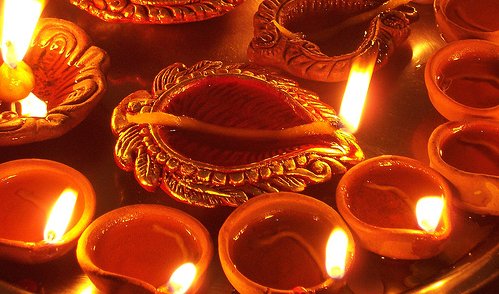
diwali
(Image by dhondusaxena)

While Buddha, Mahavira and Gosala were the famous Indian enlightened souls of the axial age, they were not the only ones. Ordinary folks had numerous options; they could believe in materialism following Ajita Kesakambali, eternalism following Pakudha Kacca-yana or become agnostic following Sañjaya Belaṭṭhaputta. It was not just a time of great material wealth, but also of a vibrant spiritual market and a common sight in those times were parivrajakas or wanderers preaching their doctrines and engaging rivals in debates in kautuhala salas built for the purpose. Philosophy was so addictive at that time that when people greeted strangers, they not only asked about their health, but also their spiritual doctrine.[1]

Modern American religious landscape is dynamic too. According to the U.S. Religious Landscape Survey, based on interviews with 35,000 people, 28% of American adults left the religion of their childhood for another one and the number becomes 44% if a switch from one version of Protestantism to another is included. The number of people unaffiliated with organized religion is 16% and this group which claims to be spiritual, but not religious has seen the largest growth. This is not just the time of the Facebook crowd, but also of the church hoppers.

The great news is that most Jehovah’s Witnesses, those irritating people who knock on your door violating laws and privacy, moved out of their faith, but unfortunately were balanced by new converts. The winners of the osmosis were the unaffiliated ones who saw a growth of 8.8% and the next came the nondenominational Protestants. The losers include Baptists (3.7%) and Methodists (2.1%), but still the biggest loser was the Catholic Church (7.5%).. The number of Catholics fell from one-third to one-fourth and a large Catholic migrant population, mainly Latinos could not put Humpty Dumpty together again.

People switched religious affiliations because they were looking for different goods depending on where they were in their life. Some wanted churches which focus on services and others wanted comfort and solace or help in raising their children the right way; a few switched for theological reasons. There are other explanations as well. During childhood, parents forced the kids to attend a religious group which was their cultural center, but as they moved out and became individualistic, they looked for religions that addressed their needs and abandoned the ones which did not.

To appreciate this religious tolerance, one has to look at the parlous time in American history when being a member of the wrong denomination could mean death. Europeans of the 17th century believed that there was one true religion and the authorities had to enforce it and punish the non-conformers. The people who faced persecution in Europe came to United States and practiced a Procrustean religious policy. The “business” of the first settlers, a Puritan minister recalled in 1681, “was not Toleration, but [they] were professed enemies of it.”

In 1658, the Massachussets legislature passed a law which allowed any constable to arrest and imprison every Quaker and banish them upon pain of death. The Boston martyrs, Marmaduke Stephenson, William Robinson and Mary Dyer were killed just because they were not Puritans.
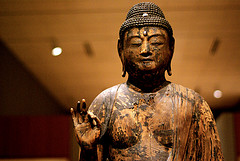
buddhaFrom there we have a reached a time when non-followers of Abrahamic religions are welcomed and are able to do well in the American society. Indic religions do not have a vast following with Buddhists forming 0.7% and Hindus, 0.4%. Among the Buddhists only 32% came from Asia whereas Hindus were predominantly from Asia and four times more Hindus migrated to United States after 1989 than those that arrived before 1960.

Even with low numbers these groups reached the top of certain categories. Hindus and Buddhists lead the religious groups in terms of education and were most likely to have a post-graduate degree. In the income category, Hindus along with Jews were the toppers. Hinduism had the highest retention rate (9/10 remained Hindu) and strong marriages (5% divorce rate). 90% of the Hindus married a Hindu, thus leading that category as well.

The survey also points to an important fact — vast majority of Americans are religious and thus different from Europe and even Canada and other industrialized countries. In fact 78% of America is still Christian which in fact implies that all this religion swapping is technically denomination swapping, like switching from Theravada to Vajrayana while remaining a Buddhist. But is it really so?

Ah, but what of the big numb stunner of a number, the one that says 78 percent of Americans still identify as Christian overall, no matter if they actually pray or attend church or run for Congress or secretly snort meth and visit gay hookers as they run an evangelical megachurch in Colorado? It certainly seems like an impressive number, like no matter how you slice it and no matter how many new beliefs spring up, we are overwhelmingly, devoutly Jesus-happy.

I’m not buying it. I suspect a huge chunk of respondents merely check the “Christian” box for lack of something else, because they felt they needed to choose something, even though they don’t actually follow Scripture in the slightest, but since they’re not technically atheists and they’ve never really ventured out on a unique spiritual quest of their own, they merely choose “Christian” as the default American position, the fallback, the safe bet, sort of like checking “average” on a customer satisfaction survey or saying “fine” when your barista asks you how you’re doing today. Thoughtless, automatic, convenient. [How to abandon your God]

References:

  1. Abraham Eraly, Gem in the Lotus: The Seeding of Indian Civilisation, 2005.
  2. Pew Forum on Religion & Public Life, “Pew Forum’s U.S. Religious Landscape Survey,”

(Buddha’s image by wicks)

Technorati Tags: ,

Indian History Carnival – 3

carnival-3

(Image by backpacker)

The Indian History Carnival, published on the 15th of every month, is a collection of posts related to Indian history and archaeology written in the past 30 days.

  1. Sukumar attends a lecture by Asko Parpola on the Indus Valley script which disproves the Farmer/Witzel/Sproat theory that Indus Valley Civilization was illiterate.

  2. Arvind Sharma finds out what ancient Indians thought about ancient Greeks and writes about the account of an Indian meeting Socrates. He has another post about the the Greek accounts of India.

  3. Stephanie laughts at the outrageous reports of Herodotus, especially the gold digging ants of India.

  4. illlaaa writes about the battle in India that stopped Alexander of Macedonia.

  5. Priya finds it hard to believe Asoka’s change of heart after the Kalinga war.

  6. Here at varnam, we had the Spicy history of Malabar about times when Kerala was part of the global economy.

  7. Manan Ahmed takes Amartya Sen to task for his “particularly cataracted vision of Indian history” and notes the similarity of thought with Karl Marx.
  8. In 1750, India’s contribution to world GDP was 25% and by the time the British left we were poor. Raj says don’t the blame the British for, ” with or without the British ruling India, the former was well placed to usher in the industrial revolution and reap the full benefits.” (via DesiPundit)

  9. Bala writes about the “Anti-Charitable Contributions Act of 1877”, meant to punish people for donating to the poor and the needy during famines. This resulted in the death of 10 million people. (via email from Ravages)

  10. Chandrahas quotes from Iranian philosopher Ramin Jahanbegloo’s new book The Spirit of India on freedom as understood by Gandhi both in the personal and in the political sense.

  11. The book that is getting lot of coverage is Ramachandra Guha’s India After Gandhi: The History of the World’s Largest Democracy. Patrix has some thoughts on this 900 page book. In his notes about the book, Hari narrates the tale of how refugee farmers were resettled in Punjab.

  12. Apollo writes, “He [Army Chief Gen Deepak Kapoor] doesn’t seem to realise that technically India and China do not share a border” and corrects the ignorance of the history of the India-China border issue.

  13. Recently the Prince of Arcot disrupted an exhibition showing the Mughal emperor Aurangzeb’s intolerant policies against his subjects. Nitin finds that this Prince of Arcot is still recognized by the Government and has the position of a Cabinet Minister, all due to a promise given to Queen Victoria.

  14. Our modern day Huen Tsang, backpakker, takes a detour and reaches Nuggehalli.

  15. Rajan Srinivasan had great pictures of Erumbeeswarar Temple at Thiruverumbur which were built by the Cholas.

If you find any posts related to Indian history published in the past one month, please send it to jk AT varnam DOT org or use this form. The next carnival will be posted on April 15th.

See Also: Previous Carnivals

Technorati Tags:

Some FACTS about Aurangzeb

French journalist Francois Gautier’s Foundation Against Continuing Terrorism put together an exhibition titled “Aurangzeb as he was according to Mughal records.”  The exhibition displayed various paintings which show Aurangzeb ordering the removal of his father’s body and trying to convert a Jewish philosopher. There were also two paintings which showed the destruction of the Somnath temple and pieces of a temple being used to build the steps of a mosque.

This exhibition was held at Delhi, Pune and Bangalore without incident, but when it reached Chennai, the Aurangzeb DNA in some got activated. The folks at Tamil Nadu Muslim Munnetra Kazhagam, Manitha Neethi Paasarai, and someone called the Prince of Arcot did not like it a bit and with violence managed to end the exhibition. According to them the displayed objects were a fabrication  and would “promote enmity between various groups” and ironically they had to resort to violence to drum once more that Aurangzeb was a benevolent ruler.

There has been great effort in India to confer an aura of sanctity on Aurangzeb by naming roads after him and whitewashing his terror. State circular (Syl/89/1) published by the West Bengal Government explicitly removed certain lines from history text books. They include, “”The early Sultans were eager to expand the sway of Islam by forcibly converting Hindus to Islam” and “”As dictated by Islam, there were three options for non-Muslims, get yourself converted to Islam, pay jaziya or face death. In an Islamic state, non-Muslims had to accept one of these choices.” Two paintings at the FACT exhibition shows exactly this.

The history books — not the state sanctioned ones — do not present a flattering image of Aurangzeb (1659 – 1707) and agree with depictions. This Mughal emperor reversed whatever tolerance Akbar had practiced. Restrictions were put on the practice of Hindu rituals, orthodox Muslims were preferred in courts,  Jaziya was reimposed and Hindu temples were demolished. This has to be contrasted with the rule of Akbar when religious tests and Jaziya were abolished and Rajput princes and other Hindus were given prominent positions in the state.[1]

Why don’t we all read the G rated NCERT text books and sing Kumbaya? Why rake up the past and cause communal disharmony?

One of the contentions of those, who protested against the exhibition, was that raking up the past would create a communal divide in Tamil Nadu, which has been relatively free of it.One of the lessons of history has been that remaining silent on unpleasant periods in history leads to a repetition of such unpleasant experiences. That is why Western school children are taught about the evils of rulers like Hitler, Mussolini, Stalin etc. That is why the Jewish people keep reminding themselves and the  rest of the world about the holocaust. That was why some years ago Jean-Marie Le Pen, the French rightist leader, was severely criticised for denying the reality of the  holocaust.

When we deny harsh truths of history, we are only playing into the hands of jihadi terrorists, who see themselves as the Aurangzeb of today. [AURANGZEBS OF TODAY]

See Also: B Raman: “Aurangzebs of Today” , From Baroda to Chennai, FACT India, Will Arundhati Roy pl. stand up for Francois Gautier?

[1] Wonder That Was India by A.L.Basham

Technorati Tags: , ,

Up above the world so high

Satellites are great, especially if you have modified SM-3 missile and a $60 million budget. Besides “unclassified purposes”, they have some suprising uses as well, such as finding long lost archaeological sites. Using images taken by Landsat and IKONOS of Tikal, a Mayan city in the Guatemalan rainforest, archaeologists were able to find several areas which were ancient building sites.

The same thing is happening in India.

The ISRO scientists are believed to have told the State archaeologists about a “sizeably big structure” buried about 175 to 200 metres north-east of Kirti Narayana Temple. Further study on the disclosure is in progress for authentication.

“The ISRO team strongly believes, from the images derived from the satellites, that a structure could have been buried close to the temple. They have brought satellite images of the place (where the structure might have been buried) for correlation. If the information matches with the field observations, then it could be one of the biggest achievements in the field of archaeology,” Dr. Gopal told The Hindu.[Groundbreaking: Satellite images aid archaeological excavations]

What next? Will people start using Google Maps and Google Earth to find ancient buildings?

Kalinganagari or Tosali?

Event 1: After the Kalinga war, Asoka issued two edicts prescribing principles on which both the settled inhabitants and the wild jungle tribes should be treated. These edicts were issued in Kalinga only and the conquered territory formed a separate unit of administration under a Prince of the royal family. The prince was stationed at Tosali, the capital of the Kalinga province.

Event 2: 60 years after the Kalinga war, Kharavela restores power back to Kalinga. After defeating an Indo-Greek king, identified as Demetrius I of Bactria, Kharavela constructed the great victory palace in Kalinganagari at a cost of thirty eight hundred thousand coins.

A 2500 year old city unearthed in Orissa is now suspected to be either Tosali or Kalinganagari or both. The remenants inlcude eighteen stone pillars (see video) and archaeologists believe that this was a city of about 25, 000 people.

There are some possibilities of Sisupalgarh representing the site of Kalinganagar. According to the inscriptions, Kalinganagara, was provided with some sort of fortifications and king Kharavela repaired the gateway and fortification wall which had been damaged by a storm. No fortified town of comparable date except Sisupalgarh is known to exist near about Khandagiri and Udayagiri hills. Secondly the excavation did reveal a collapse and subsequent repair of the southern gateway flank of the fortification. Thus, historical and archaeological sources suggest that Sisupalgarh represents Kalinganagara.

An assemblage of 16 monolithic pillars, locally called Shola Khamba in an area of some 30 m x 30 m near the centre of the fortress were of special interest. Built up of laterite, some pillars are
bearing medallions like those found in Bharhut, Sanchi, Udayagiri and Khanadagiri caves. The columns measure over 4.9 m in height and have a maximal diameter of about 70 cm. This could be the remains of a pillared hall since the pillars have horizontal sockets, seemingly intended to hold
superimposed beams or rafters. However only few pillars are standing intact while others are missing their upper portion. The ground level inside the fort is 4.5 meter higher than outside. The fort while being too large for a mere citadel enclosing perhaps the king’s palace and attached
residence or quarters, did not seem to accommodate common people, most of whom lived outside its confines as it appears from the pottery remains towards the north and the west.[Sisupalgarh: Fortified Urban Center of Early Historic India ]

The reports says that this city had about 25,000 residents and such numbers come from guess work and field work.

Estimations based on residential density are also common practice—the more homes you find, the more people lived there. Soil analysis, pottery shards, old foundation walls, and hearth remains help researchers differentiate buildings from gardens or farmland. Architectural features distinguish residential from civic structures (the latter are larger, and more ornate) and make it possible for archaeologists to establish a density estimate across a sample area—25 homes per hectare, for example. Then they guess how many people lived in each household, on average. If no records are available to illuminate domestic arrangements, researchers study modern village populations in the same area to arrive at a rough estimate—perhaps four people per domicile. Then the archaeologists multiply the number of individuals per household by the households per hectare, and again by the total settlement area.[25,000 Inhabitants, 2,500 Years Ago]

Technorati Tags: , , , ,