A new date for Exodus

According to the Book of Exodus in the Hebrew Bible, Moses led the Israelites out of slavery in Egypt and  received the Ten Commandments from God. There are sceptics who suggest that Moses never existed as a historical figure and that the Exodus too is mythical. Now in a new documentary titled The Exodus Decoded, filmmaker Simcha Jacobovici suggests that the Exodus did happen, and it happened around 1500 BCE.

Jacobovici set out on his Exodus quest after doing a documentary in the 1990s on a group of people on the Indian-Burma border who claim to be the lost Israelite tribe of Menashe. That film was met with widespread criticism by people Jacobovici branded as “so-called experts.” Jacobovici said he himself was skeptical of the tribe’s Israelite claims until he researched the subject.

Similarly with the new Exodus documentary, he asserted that with his hefty $3.5 million budget, a lack of preconceptions, and none of the restrictions of conventional archeological wisdom, he was free to reach what he insists are credible conclusions about the Exodus. The 55-year-old director, whose original claim to fame was his first-ever documentary Falasha: Exile of the Black Jews, made two and half decades ago and which focused on Ethiopian Jewry, said his research for the lost tribes film spurred him to question the widely accepted assumptions about what he called “the founding story of Western civilization” – the Exodus of the Jews from Egypt.

Six years later, mixing science, religion and a variety of archeological findings, Jacobovici is convinced that he has seen the light. Most of the archeological findings cited come from Egypt, with others from Greece. He said he researched in six countries, including Israel and the UK.

The 10 plagues that smote the Egyptians, according to the Bible, are explained in the documentary to be the result of a volcanic eruption on a Greek island that occurred 3,500 years ago. [Documentary sets new date for Exodus]

What was happening in the world at that time? In the middle of the second millennium BCE, Hittites , Egyptians and Mitannians were struggling for supremacy in the Levant. Myceneans of mainland Greece had taken control of Crete and the Aegean, and the Olmec of Mesoamerica had begun to build their massive ceremonial centers. In China, the Shang state had assumed control.

This time frame coincides with the time the Indus Valley civilization was on the decline probably due to the disappearance of the Ghaggar-Hakra river system, tectonic activity or a failure in monsoons. After the demise of the Indus civilization, the main cultural and political focus shifted to the east, to the Ganges valley. It was a thousand years before the Buddha was born.

This documentary also identifies an image of that time frame, 1500 BCE, of the Ark of the Covenant in an Egyptian museum, that according to film makers is proof of Exodus. The Ark of the Covenant, the sacred container which contains the stone tablets having the Ten Commandments is the same thing which the Nazis and Indiana Jones were searching for in Raiders of the Lost Ark.

The documentary also identifies the real location in Mount Sinai where Moses received the Ten Commandments. Currently, Saint Catherine’s Monastery in Mount Sinai, built around the Chapel of the Burning Bush is considered to be the site where Moses is supposed to have seen the burning bush. When the documentary is shown on The History Channel on August 20th, we might know more details.

Converting waste to fuel

There are many advantages of not having to depend on oil for fuel needs. For a nation like India, energy independence will remove the need to bow before the middle-east dictators  and remove this competition with China to grab all oil wells in the world. With this freedom, United States could ignore the lunatic statements from Hugo Chavez and we all could live to see the day when Saudi Arabia’s major business is exporting camels. The problem though is in finding a cost effective alternative.

The market for alternative energies is huge and Venture Capitalists in the Bay Area like Kleiner Perkins and Khosla Ventures have invested in biofuels companies like Altra and Cilion. With companies like VeraSun and Aventine going IPO, ethanol is getting focus as that major alternative. Using E85 (85% ethanol, 15% gasoline) could also revive the slumping American car industry and give a boost to farmers.  Going by market trends, Ethanol seems to be the silver bullet as even Wal-Mart is planning to pump ethanol based fuel in gas stations around the country.

But corn based ethanol is not without problems. Ethanol is expensive to make. The fuel efficiency for E85 based vehicles are less compared to the ones running on gas. Besides this ethanol has to be carried in trucks or trains (as there are no pipelines) which requires more fuel to be spent. 

In Back To The Future II  or III, Dr. Emmet Brown comes back from the future , flying in his time machine and is seen scavenging the garbage carts for fuel. He find some soda cans and other pieces of garbage and stuffs it into the fuel tank. This future is near and soon we will all be doing the same , if we are going to use cellulosic ethanol as fuel.

In corn based ethanol, the corn is ground and mixed with water. The enzymes convert the starch to sugar and sugar eating micro-organisms  excrete ethanol, which is distilled and used. With cellulosic ethanol, we don’t have to depend entirely on corn. Farm waste like corn kennel, wheat and barley straw, leaves and stalks of plants can also be used as the source of ethanol.

Finally the cost of cellulosic ethanol is expected to be $1.35/gallon compared to $3.20/gallon right now for regular gasoline. This should be a big boost to consumers who can then buy Ford Explorers and H3s without guilt. Since cellulosic ethanol depends on farm waste, these giant SUV owners can claim that they are clearing waste instead of creating it. In Kerala where we stay, throwing garbage over the wall to the road is considered  good civic sense. If it turns out that this garbage can be used as fuel, then my neighborhood will be the cleanest place in India.

Asoka and Orissa

The association between Emperor Asoka and Orissa go much beyond the Kalinga war.  There are people who suggest that Asoka had never ever been to Orissa , even though there are statues with the inscription that it was unveiled by Asoka himself.   When Huen Tsang visited Orissa in the 6th century, he saw ten stupas in the Odra country, established by Asoka and present day archaeology in that region have given lot of artifacts, dating to the time of Asoka. Excavations done by the Orissa Institute of Maritime and South East-Asian Studies are revealing new facts about the capital of Kalinga, the city of Tosali and if Vajragiri had ties with Japan.

The organisation had extensively surveyed the Brahmani-Kelua river valley since 1996 to explore and excavate Buddhist sites. It had excavated Langudi hill site and discovered the ancient Pushpagiri Vihara, an Ashokan Stupa, two rare statues believed to be that of Emperor Ashoka himself, besides 54 rock-cut votive Stupas, five Dhyani Buddha statues and remains of two monasteries.

The excavation of the fort of Radhanagar indicated that it could be the ancient capital of Kalinga, Pradhan said. The excavation of the fort of Radhanagar indicated that it could be the ancient capital of Kalinga, Pradhan, also the curator of state archaeology, said.

The artefacts discovered from last year’s excavation established that Radhanagar or Tosali was a fort city. But interesting findings of this year indicated that it could be a Port city.

Restoration of Katasraj to start soon

After Malaysia decimated a Hindu temple, Lahore’s only Hindu temple was also demolished to construct a commercial building. Now in a welcome development, Pakistan is spending about $25 million for the restoration of the Katasraj temple.

Pakistan has many famous Hindu temples like the Sharada Thirtha, the temple of Lav (Rama’s son) and Katasraj . Katasraj temple, according to mythology is the place where the Pandavas met the Yaksha who asked them the ‘Who wants to be a millionaire’ questions.  Al-Biruni mentioned in Ta’rikh al-Hind (“Chronicles of India”) that he learned Sanskrit and Science at Katasraj. The restoration work is expected to start next month.

A comprehensive study had been conducted. The temple ponds would be cleaned, enlarged and fenced, sources said, adding that the Shiva temple and the adjacent area would be restored and debris removed. The missing staircase would be rebuilt and the walls would be plastered, they said.The sources said that proper pathways leading to the pools, the Shiva, Hanuman and Ram temples, as well as the stupa and Hari Singh

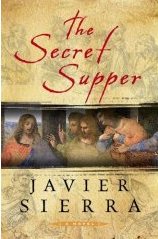
Book Review: The Secret Supper

The Secret Supper by Javier Sierra, Atria (March 21, 2006), 336 pages

secretThe novel starts with the death of Beatrice d’Este, the wife of Ludovico Sforza, the Duke of Milan during childbirth. Three days before this event, a man calling himself the Soothsayer had sent a letter to Rome predicting this. The year is 1497  and and Leonardo da Vinci has been commissioned by the Ludovico Sforza, to paint The Last Supper in the refectory of the convent of Santa Maria delle Grazie. The Soothsayer’s weekly letters also suggest that there is a hidden message in the painting and it should be stopped.

Agostino Leyre, a father in the Secretariat of Keys of the Papal States, a secret congregation,  is sent to Milan to investigate the matter. The father was chosen since he was an expert in codes and had analyzed previous messages of the Soothsayer. His only clue in finding the Soothsayer is a riddle in one of the letters. The Father chooses to stay in Santa Maria delle Grazie and starts working on the puzzle with the help of Father Alessandro, the convent’s librarian.

While there are some initial attempts at solving the puzzle, it is pushed to the background as the Father learns more about various heretic in Milan and what they want to accomplish. About sixty years back, during the time of Pope Eugene VI, the Patriarch of Florence and held a council which could have succeeded in altering the course of Christendom. The Patriarch, Cosimo de’ Medici had purchased the books of Aristotle and Plato and learned about the immortality of the soul and how heavenly bodies were responsible for everything. This knowledge was not palatable to the Church and hence the current Duke of Milan wanted to hide this information publicly using art,  with the help of Leonardo da Vinci.

Leonardo da Vinci, the major character in this book appears in every other chapter, dressed in white, looking like a giant, setting puzzles for the monks to solve while working with his disciples on bigger secrets in the convent. The community of monks in the convent know that Leonardo is working on concealing a mystery in The Last Supper, but they are unable to find out the sepcifics. Leonardo already had a reputation for painting things not found in the Gospels and monks faithful to the Pope were always trying to find some clue to hold against him. There had been accusations that he found inspiration from Apocalipsis Nova, a book written by his friend, Amadeo of Portugal, in which it is suggested that the Virgin and Saint John the Baptist were the true protagonists of the New Testament, and not Christ.
Continue reading “Book Review: The Secret Supper”

She Sells Sea Shells

Around 100,000 years back, if the woman had “headache”, the man knew the trick to make it disappear – jewelry. While people thought that such creative thinking started only about 50,000 years back, new discoveries are changing the timeframe.

An international team of archaeologists, in an article in Friday’s issue of the journal Science, reported their analysis of small shells with distinctive perforations that appeared to have been strung together as ornamental beads. Chemical study showed that the two shells from the Skhul rock shelter in Israel were more than 100,000 years old, and the single shell from Oued Djebbana, in Algeria, was about 90,000 years old. [Shell Jewelry said to be 100,000 years old]

The article also notes that the sites where the shells were found were far from the sea shore indicating that they were bought there intentionally. This could mean that there could be an industry of shell making in all these regions. This shell making industry was found in India also, but not in the timeframe of the sites in Israel and Algeria. In 2004, a Harappan site was found in the small town of Bagasara in Gujarat. This site which dates back to 2500 B.C was found to have a shell making workshop, fortifications, and knives with bone handles.

Shell bangles have been found before but not a workshop with a such a concentration of shells. The presence of the workshop reveals that the shells were cut and polished into fine bangles. Several heaps of sacred conch shells along with thousands of shell circles systematically cut from these shells have been discovered. Workshops of faience and lapidary stone beads have also been found. [Parallel rural civilization to Harappa]

A similar industry dating to about 1800 BCE was found in Bet Dwaraka as well.

ICHR says – No Aryans or Dravidians

Romila Thapar  has said it. Dr. Jonathan Mark Kenoyer, who has been excavating in the Indus city of Harappa has said it. Now the bastion of the Eminent Historians – the Indian Council for Historical Research (ICHR) too agrees that  there is nothing called Aryans or Dravidians and we Indians all  belong to the same gene pool.

The test has classified the people in north and south India as belonging to one gene pool, and not different ethnic groups such as Aryans and Dravidians.

Giving the information to The Hindu here, Chairman of the Indian Council of Historical Research D.N. Tripathi said geneticists from Pakistan had collected samples for genetics analysis of the people of Indian subcontinent and sent them to cellular and molecular biology laboratories in the U.S. Scientists in Pakistan concluded from the test results that the human race spread out of Africa 60,000 years before Christ. They settled in the subcontinent. Geneticists in Pakistan concluded that people living in the northern and southern regions of India and those in the West Asian region were from the same gene pool, he added.

Asked about the argument of many historians tracing the lineage of people in north India to Aryans, Prof. Tripathi said test results had proved this wrong. “We have the results of studies. The conclusion of some historians that Aryans came here 15,000 years before Christ does not hold water,” he added.  [People in north and south India belong to the same gene pool: ICHR Chairman via Rajeev Srinivasan]

Two observations

  1. According to the theory supported by the Aryan Invasion/Migration folks, the invasion/migration happened between 3000 – 1000 BCE and not, 15,000 years back.
  2. The fact that humans migrated out of Africa some 85,000 years ago has been proved by the Bradshaw Foundation and Professor Stephen Oppenheimer and hence that too is not a new revelation

Slowing down the Panda Express

If you are rich, it can open many doors, especially in a developing nation. This is what the Chinese officials discovered recently when they wanted to visit El Salvador, Guatemala, Honduras, Paraguay and Chad. China’s state controlled China Mobile Communications Corp is on a $5.3 billion dollar deal to buy Millicom International Cellular SA of Luxembourg. Chinese officials had to visit these countries to study Millicom’s finance and operations. Not having a diplomatic presence was a hiccup, but it was soon overcome by talking directly to the President or the concerned minister in each of those countries.
Then not all developing nations are the same. According to a new Wall Street Journal article, Indian Govt. has been treating Chinese businesses with suspicion. When China’s Huawei Technologies wanted to establish a new facility to make telecommunications equipment, permission was denied. Both China’s ZTE Corp and Hutchison Whampoa from Hong Kong were denied permission to do business. China’s CIMC-Tianda was allowed to setup air bridges in certain airports, but then were not allowed in some other airports.
The article suggests that Indians do not trust the Chinese because of the 1962 war. That is partly true. The two nations have not gone for war for more than 40 years and since time heals all wounds, the relationship should have gotten better. That may not happen since there are many reasons to remain suspicious of Chinese intentions.
The Indians have more reasons to worry that America and Europe due to the proximity and the semi-hostile relationship. China’s “managed proliferation” to Pakistan has not really helped smooth relations. The aggressive nature by which China is going on surrounding India also does bode well in improving confidence. Unlike other nations, most of China’s companies are state owned and may have more than business interests in mind.

With its new wealth, China has been inventively building trade and transportation links to further its larger interests. Such links around India

Lost Temples of India

If you switch on The History Channel, you are overwhelmed with documentaties on Egypt. Every pyramid, every pharoah and every single grain of sand has a documentary. “Ancient Secrets of Egypt”, “Really Ancient Secrets of Egypt”, “The secret of the pyramids”, “The Pharoah’s slave’s wife’s second cousin’s story”, so goes the list. But if you ask which Indian emperor has moved more stone than the pyramid in Giza to construct a temple, everyone would blink.
It was refreshing to see the documentary called The Lost Temples of India ( via lazygeek) on the Big Temple at Tanjore, constructed by Raja Raja Chola. The documentary talks about how Raja Raja selected elephants for battle, how he moved 40 tonne granite stones to build the temple and the techniques used for cutting granite. They even find the remains of the ramp which could have been used for sliding up the stones.
Besides the Tanjore temple, the documentary also talks about the Vijayanagara empire, Sri Rangam and the temples of Khajuraho.

Forgive Them Lord..

Finally the High Court of Andhra Pradesh had to lecture the State Government on why it should not have banned The Da Vinci Code.

Rejecting these arguments, Mr. Justice Raghu Ram, in his 48-page judgment, said, “The Constitution does not confer or tolerate such individualised hyper-sensitive private censor intrusion into and regulation of guaranteed freedom of others.”
Tracing the concept of freedom of speech and expression and its necessity for the blossoming of the human mind, he noted that the Censor Board had cleared the film with appropriate conditions. A film was not like a billboard or hoarding that involuntarily affected innocent passersby. Those who purchased tickets to see the film made a conscious decision, and the state had no role to stop the screening.
Mr. Justice Raghu Ram said the authorities who passed the ban order had not even seen the film. The officer “mechanically certified” the veto of a few objectors rather than arriving at a decision based on informed satisfaction. This was “arbitrary, casual and [a] wholly irrational exercise of a very sensitive and responsible executive power, namely the regulation of a cherished, valued and guaranteed fundamental freedom of expression.”
The judge, who saw the film at a special screening, recalled various works on different interpretations of Jesus Christ.
The court said, “Freedom of speech and expression contributes to the richness and equilibrium of human existence.” Terming the Government’s action wholly negligent and an irresponsible exercise of executive power, the judge directed the Government to pay Rs. 10,000 each to the distributors and Rs. 2,500 to Mr. Reddy. [ A.P. ban on Da Vinci Code quashed]

The movie will now be released in the state, but Congress has proved to its vote bank that it is an upholder of “secularism”