Book Review: The Places in Between

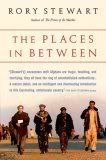
The Places In Between by Rory Stewart, Harvest Books (May 8, 2006), 320 pages
Travelogues are  interesting when they have an angle to it. For example Bruce Feiler’s Walking the Bible is a journey from Egypt to Jerusalem along the path followed by Moses. Chasing Che is a motorcycle trip along the route that Che Guevera took. Jaya Ganga: In Search of the River Goddess is travel from the origins to the end of river Ganga, Chasing the monsoon is a journey of a man following the path of monsoons in India and Ten Thousand Miles Without a Cloud by Shuyun Sun  follows the path taken by Huen Tsang, the Chinese pilgrim who toured India during in the 7th century.

All those writers had a peaceful journey and most of their interesting narrative comes when they meet very interesting people on the road. Compared to them, Rory Stewart did not have it easy. For one he decided to walk from Herat to Kabul in January when it was still snowing in the mountains and second it was the January of 2002 when it was still not safe for anyone to walk through Afghanistan. With his knowledge of the language, customs, and sometimes pure luck, he survives and writes one of the best travelogues I have read.

He decided to take the central route through Afghanistan because it was shorter and the Taliban were still fighting in the southern route, not because he wanted to follow the path of any historical person. As he finalized the trip, he discovered that Zāhir ud-Dīn Mohammad aka Babur, the founder of the Mughal Empire had also walked along the same route in January, five hundred year back, and had recorded his journey in his diary. Armed with Babur’s diary, Stewart sets of on foot ignoring warnings by Afghanis themselves.

After warning him that he is guaranteed to be killed during this trip, the security service in Herat  gives him two armed body guards Qasim and Abdul Haq who walk with him for many days before turning back. From that point Stewart makes use of the Afghan hospitality in which the village chief or the tribal leader sends his son along with him to see him safely to the next village. Sometimes he walks alone, and for quite some part of the journey he walk along with Babur, a dog which was gifted to him in one of the villages.

Then as Stewart writes, “..never in my twenty-one months of travel did they attempt to kidnap or kill me. I was alone and a stranger, walking in very remote areas; I represented a culture that many of them hated and I was carrying enough money to save or at least transform their lives. I was indulged, fed, nursed and protected by people poorer, hungrier, sicker and more vulnerable than me”. While he gets food and shelter in most villages, he finds that in some villages people are reluctant. Then he has to remind them of Afghan hospitality and that he is a guest in their country and most of the time it worked.

Just before he enters the Darai-e-Takht village located in a gorge of the Hari Rud River, he gets shot at. When he is resting in an inn, he is joined by a thirty year old commandant of Obey, Mustafa, who had shot at him a while back.  Mustafa it seems had shot at Stewart because Mustafa’s cousin had bet that he couldn’t hit Stewart. After listening to Stewart’s story, Mustafa agrees to give him a letter of introduction and provide him with five armed men as honor guard.

Most of the people he meets have fought in some war, either against the Russians or for the Taliban or against the Taliban. An excellent anecdote comes in the chapter where he meets Seyyed Umar Khan in the village of Garmao and asks him why he became a Mujahid. “Because the Russian government stopped my women from wearing head scarves and confiscated my donkeys”, he says. When asked why he fought against the Taliban he says, “Because they forced my women to wear burqas, not head scarves and stole my donkeys”. As Kaplan mentioned in Soldiers of God, the Afghans want to be left alone.

He also meets quite a number of people, like members of the Hazara tribe who hate the Taliban for the the killings they did. In village of Gorak he meets the headman’s son who shows him a copy of Koran which was burned when the Taliban burned their house. When asked to recollect the names and number of people who were murdered by the Taliban, they are not able to for the only thing they cared about was the Koran. As he walks through the Shaidan pass he realizes that it is a ghost town where the Taliban had killed about eighty men in the bazaar. Stewart also meets a Taliban commander in Wardak who asks him if Stewart thinks Usama bin Laden or George Bush is better and if he is a Muslim. Using his wits, he survives the interrogation.

In Bamiyan he climbs up the destroyed statues of the Buddha and sees that the Taliban had torched the interior of rooms to destroy some frescoes and had boot stamps on ceilings which were twenty feet high. Stewart notes that Buddhism was weakened by the Hindu revival in the first millennium and was extinguished by Islam. Then the Taliban destroyed even traces of it.

Even though Stewart sees pictures of Hritik Roshan in Herat  and buxom Bollywood actresses in Kabul, there is one thing in which the Afghans will disagree with the Indians. The question is who owns the Koh-i-Noor? In the village of Dideros, a fat old man asks Stewart when the English are going to return the diamond to them. After Babur acquired it in Delhi, it passed hands from Humayun to Shah Jahan. In 1739 Nadir Shah, the ruler of Iran got it from Shah Jahan’s heir and took it to Iran across Afghanistan. Nadir’s son gave it to Ahmed Shah Durrani, the founder of modern Afghanistan who kept it in his capital in Khandahar and hence the Afghans think that the diamond is theirs.

Most of the people whom he met were illiterate villagers who did not have electricity or television. They knew very little about the outside world and the only thing that connected them to rest of the world was Islam. Even the rights of women varied from region to region. In some villages he never gets to see any women publicly whereas in some villages women talk to him. Even political power mean different things in different regions. Some people wanted a feudal lord and some hated a centralized government. In some places
violence had been inflicted by t
he Taliban and in some places the villagers had inflicted it on themselves.

Filled with anecdotes, excellent footnotes and drawings Stewart did on his journey, this book is a wonderful read. Once you read Kaplan’s book followed by Stewart’s, you will get a good idea about the politics and people of Afghanistan.
A Second Century BC Computer

From nytimes.com:  An Ancient Computer Surprises Scientists

They said their findings showed that the inscriptions related to lunar-solar motions and the gears were a mechanical representation of the irregularities of the Moon’s orbital course across the sky, as theorized by the astronomer Hipparchos. They established the date of the mechanism at 150-100 B.C.

The Roman ship carrying the artifacts sank off the island of Antikythera around 65 B.C. Some evidence suggests that the ship had sailed from Rhodes. The researchers speculated that Hipparchos, who lived on Rhodes, might have had a hand in designing the device.

The mechanism, presumably used in preparing calendars for seasons of planting and harvesting and fixing religious festivals, had at least 30, possibly 37, hand-cut bronze gear-wheels, the researchers reported. An ingenious pin-and-slot device connecting two gear-wheels induced variations in the representation of lunar motions according to the Hipparchos model of the Moon’s elliptical orbit around Earth.

The functions of the mechanism were determined by the numbers of teeth in the gears. The 53-tooth count of certain gears, the researchers said, was “powerful confirmation of our proposed model of Hipparchos’ lunar theory.”

The detailed imaging revealed more than twice as many inscriptions as had been recognized from earlier examinations. Some of these appeared to relate to planetary as well as lunar motions. Perhaps, the researchers said, the mechanism also had gearings to predict the positions of known planets.

A photo of this device can be seen here

Avoiding Stampedes

In 2003, during the Kumbh Mela in Nasik 39 pilgrims were killed and 59 injured. In 2005 there was a stampede among a large number of Hindu worshippers on their way to to the Mandhara Devi shrine near Mumbai and 258 people were killed. This stampede is a big problem in Saudi Arabia too and in Janurary last year 345 pilgrims were killed as pilgrims rushed to complete the stoning ritual. To prevent this from happening again, the Saudis have enforced certain rules for crowd control which can be used by us as well.

A Saudi team recently returned from a crowd management workshop in Munich where they learned how to apply German experience in managing the tens of thousands of soccer fans during the last World Cup to the crowds of pilgrims at Jamrat. “We’ll apply what we have learned from Germany at Jamarat during this Haj season,” said Dr. Fadhil Othman of the Haj Research Institute, who participated in the workshop. The Saudi team watched how the Germans controlled large crowds of soccer fans rushing to an area of television screens to watch World Cup matches.

Police stopped people going to the area when 75 percent capacity was reached. They also made sure that there was adequate space in between people to move around freely without any pushing or pulling. “Another important thing we learned is that pilgrims should move in one direction and nobody should be allowed to move in the opposite direction,” he said while speaking about Jamrat crowd control strategy. [Advanced Strategy Adopted for Jamarat Crowd Control]

Were Harappans the Vedic people?

According to the Aryan Invasion/Migration theory folks, Aryans came to India sometime between 1500 – 1200 BCE and then composed the Vedas. In the book In Search of the Cradle of Civilization, Georg Fuerstein, Subhash Kak and David Frawley demolish this theory and suggest that the Vedic people were residents of the cities of Harappa and Mohenjo-Daro.

The authors argue that the people of Harappa were Vedic Aryans who had reached India a long time back. Indo-European speakers are now thought to have been present in Anatolia at the beginning of the Neolithic age. Migrations would have happened during the Harappan times as well, but the new immigrants would have found a prominent Sanskrit speaking Vedic people in Harappa. It is possible that the Vedic people walked on the streets of Mohenjo-Daro and Harappa and even possibly Mehrgarh and they did not come as conquerors or destroyers from outside India, but lived and even built the cities in the Land of Seven Rivers.[Book Review: In Search of the Cradle of Civilization]

A while back Nanditha Krishna also wrote an article suggesting the same. In a recent lecture, Jonathan Mark Kenoyer, associate professor in anthropology at the University of Wisconsin, Madison agrees with this.

Kenoyer said modern archaeological findings do not support the idea of an Aryan ‘invasion,’ but show that Vedic people were among those who lived in cities such as Mohenjo Daro in Sindh and Harappa in Punjab towards the end of the Indus civilization, which stretched between 7,000 BC and 1,900 BC. “These were sophisticated cities with wide roads, gates designed to keep intruders out and where those coming in or going out of the city with goods could be taxed. There was a water supply and proper drains. It was only when the Saraswati dried up and Mohenjo Daro and Harappa became overpopulated because other cities lost their water supply that the cities declined,” said Kenoyer, comparing that period with the fate of cities such as Amritsar and Lahore at the time of Partition. As many as 50,000 people may have lived in Harappa at certain periods and the people of the Indus civilisation formed ethnic groups, said Kenoyer, citing figurines showing seals with symbols such as the buffalo or unicorn to represent different ethnic groups. The unicorn symbol was invented by the Indus people, and spread to Europe centuries later via Mesopotamia and Near East, he said.

There was no single ruler in these cities. We’ve found no palace. Instead, there seems to have been a republic in which a group of elders ruled,” said Kenoyer.

What was earlier believed by archaeologists to be a grain store in Harappa now seems likely to have been a textile weaving centre, and fine cloth from the area was exported far away, he said.[Harappa was like any other metro: US prof]

Indian Mythology based Comics

The Wall Street Journal writes on the new comic books created by Richard Branson’s Virgin Group, Deepak Chopra, and Shekhar Kapur

It’s a key scene in “Devi,” a new comic book that’s part of an ambitious effort by a unit of Richard Branson’s Virgin Group Ltd. to develop story lines based on Indian religion and mythology. Others take inspiration from the Sanskrit epic poem Ramayana and traditional legends such as one involving snakes that can take human form.

The company, Virgin Comics LLC, has also teamed to develop other story lines with a broad range of individuals, including John Woo, director of “Mission: Impossible 2,” and Guy Ritchie, the film director. In November actor Nicolas Cage agreed to star in a movie based on one of the new comics, “The Sadhu” — which describes the adventures of a British man who discovers he was a sadhu (Hindu holy man) in a previous life. Deepak Chopra, the author of self-help books, will write the screenplay.

The goal: Capitalize on the current vogue for all things Indian as well as the success of Asian comics in the West in recent years.[Holy Heroes of Indian Lore, Batman!]

Book Review: Soldiers of God

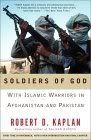
Soldiers of God: With Islamic Warriors in Afghanistan and Pakistan by Robert D. Kaplan, Vintage edition (November 27, 2001), 304 pages

Most people think that the decline of Afghanistan started with the Soviet invasion in December 1979, but it was not the case. On April 27, 1978, Nur Mohammed Taraki, a self-declared Marxist came to power in a coup. Following examples showed by illustrious Communists like Mao, Stalin and Pol Pot, they executed 27,000 political prisoners in the Pul-i-Charki prison located six miles east of Kabul. They enforced land reforms and extended secular education to the villages, but the way it was done was so brutal that even the Soviets were alarmed. The mujahidin revolt  and the refugee exodus to Pakistan was triggered  by this Communist land reform and was the first instance of organized repression in Afghanistan’s history according to Robert Kaplan.

Kaplan, who is currently the editor of Atlantic Monthly wrote the book by traveling with the Mujahidin into Afghanistan in the 1980s while they were fighting against the Soviet Army. This war largely went unreported according to him. None of the American TV networks had a bureau for the war in which the Communists killed 1.3 million people which is more than the deaths in the Iran-Iraq war and ten times the number killed in Lebanon in all years of civil conflict there. Kaplan quotes a Swedish nurse who lived through some fierce fighting in north Afghanistan saying that every day in her short-wave radio she would hear about people killed in South Africa, Lebanon and Sri Lanka, but there was no mention of Afghanistan.

It was not easy for Kaplan to cover this war as well. While on jeep between Quetta and Khandahar driving in a desert  he hears the drone of a Soviet aircraft. Kaplan panics and asks his driver about it. The driver without any signs of nervousness says that the plane is an Antonov transporting troops and they don’t bomb. As they reach the Arghandab River Valley, he meets Ismael Gailani, a commander while mortars are raining all around. One of the mortars land about a hundred feet away throwing dust into his tea. All this time the Mujahidin sat around him relaxed, smiling and impassive.
Continue reading “Book Review: Soldiers of God”

Coming to car near you

Imagine you are driving peacefully on your Ford on Highway 101. There is the mandatory accident at Marsh Road exit and someone driving a Chevy Tahoe at 55 miles/hr on the left lane blocking your view of not just the road ahead, but also of the sun. Then there is that someone driving a 1900 Toyota Corolla thinking it is a Ferrari weaving across lanes, you know, the usual stuff. Your car halts abruptly, brings a window on the display and informs you that it has downloaded the latest updates and the machine needs a reboot to proceed. Of course, this is an exaggeration, but some version of this is soon possible as Ford is planning to install an in-vehicle operating system developed by Microsoft in Focus and Five Hundred sedans.

The Dearborn, Mich., auto maker will unveil next month a hands-free Bluetooth wireless system and in-vehicle operating system developed by Microsoft that will eventually be an option for its entire Ford brand lineup, according to people familiar with the matter. The new system, to be dubbed Sync, will allow for hands-free cellphone communication and other wireless information transfers inside the car, including the ability to receive email and download music, these people said.

Sync is based on Microsoft’s automotive operating system that has been under development in recent years by the company’s Windows Automotive division, which in 2004 struck a broad development deal with Fiat related to in-car computing. A person close to Microsoft said the company has turned in a spotty performance when it comes to Bluetooth technologies and that the Ford deal could help spur Microsoft’s efforts. [Ford Aims to Jazz Up Its Fleet With Microsoft Pact (subscription reqd.)]

Thankfully this will not affect Indians in the United States as we drive only Hondas and Toyotas.

Saddam hanged, Malayalees suffer

According to an Iraqi court Saddam Hussein was  found guilty of the massacre of Iraqis in Dujail and sentenced to death.

“Now, he is in the garbage of history,” said Jawad Abdul-Aziz, who lost his father, three brothers and 22 cousins in the reprisal killings that followed a botched 1982 assassination attempt against Saddam in the Shiite town of Dujail. It was the Dujail killings of which Saddam was convicted. [Iraqis execute Saddam for mass killings]

But then in Kerala we mourn for such brutal dictators and a hartal was called by both the Communists and Congress.

Stating that the “American imperialism has raised a grim challenge to the world peace once again through the execution of Saddam Hussein”, Chief Minister V S Achuthanandan said the Iraqi leader would be remembered forever as a martyr who heroically fought the imperialist interests.[Hartal in Kerala, leaders condemn Saddam’s execution]

For members of a party which think that the Communist occupation and enslavement of Tibet is “peaceful liberation“, Saddam could be a martyr. No mention of his invasion of Kuwait or the murder of a large number of Shiites and Kurds or any of the atrocities mentioned in an article in the New York Times.

DOING the arithmetic is an imprecise venture. The largest number of deaths attributable to Mr. Hussein’s regime resulted from the war between Iraq and Iran between 1980 and 1988, which was launched by Mr. Hussein. Iraq says its own toll was 500,000, and Iran’s reckoning ranges upward of 300,000. Then there are the casualties in the wake of Iraq’s 1990 occupation of Kuwait. Iraq’s official toll from American bombing in that war is 100,000 — surely a gross exaggeration — but nobody contests that thousands of Iraqi soldiers and civilians were killed in the American campaign to oust Mr. Hussein’s forces from Kuwait. In addition, 1,000 Kuwaitis died during the fighting and occupation in their country.
More recently, according to Iraqis who fled to Jordan and other neighboring countries, scores of women have been executed under a new twist in a “return to faith” campaign proclaimed by Mr. Hussein. Aimed at bolstering his support across the Islamic world, the campaign led early on to a ban on drinking alcohol in public. Then, some time in the last two years, it widened to include the public killing of accused prostitutes.

Often, the executions have been carried out by the Fedayeen Saddam, a paramilitary group headed by Mr. Hussein’s oldest son, 38-year-old Uday. These men, masked and clad in black, make the women kneel in busy city squares, along crowded sidewalks, or in neighborhood plots, then behead them with swords. The families of some victims have claimed they were innocent of any crime save that of criticizing Mr. Hussein. [How Many People Has Saddam Killed?]

Of course, as usual Americans are terrified after listening to the hardship enforced on Malayalees by Malayalees and are busy googling to see who Achyutanandan is.

Thus said Manmohan Singh

India’s alleged Prime Minister Manmohan Singh says

“We will have to devise innovative plans to ensure that minorities, particularly the Muslim minority, are empowered to share equitably in the fruits of development. They must have the first claim on resources,” Singh said. [PM’s priority: Muslim development]

So now just because you pray to one God you get preferential treatment. Isn’t that wonderful. Sandeep has an excellent analysis of these clowns running the UPA.