Recently, the creator of Claude Code shared a glimpse into his workflow, and it is wild: by running multiple AI sessions in parallel and intervening only when a human sign-off is needed, he knocks out 50 to 100 code changes a week. That is an insane level of productivity. He isn’t doing prompt engineering like a drunken monkey; he writes master plans, lets his agents do the heavy lifting, and tells them to ping him only when a human intervention is needed.
But the real issue here isn’t velocity. It’s cognition. AI agents can spit out code at a breathtaking pace, but our brains haven’t evolved over the past year to match the speed of the latest Nvidia chips. How do you even understand what’s going on at that speed? Personally, I fail miserably at it.
This mismatch sits at the core of the humanistic critique of AI. Automating pure drudgery—like asking an AI to write hundreds of tedious unit tests for your codebase—is a brilliant use of the tech. But automating deep thinking is a dangerous direction to go. We shouldn’t want to automate away hard thought. Too many people use AI to spare themselves from reaching the high peaks of concentration and mental struggle required to actually create something meaningful.
To see why this matters, look at a story from the book Hamlet’s BlackBerry. The author is driving to his mom’s house, realizes he’ll be late, and calls her. Once the call ends, he drives the rest of the way in total silence, reminiscing and getting completely absorbed in his memories of his mother.
Think about what happened there: a practical task (the phone call), and then a gap. Because that empty space existed between the task and his next action, a deeper experience was allowed to happen. If he had immediately switched to another app on his phone, that reflection would not have happened. Every form of knowledge we work with behaves exactly like this. Information only transforms into deeper value and long-term impact if we give it room to breathe.
Since you are reading this, you are a reader. You probably choose articles and books over mindlessly scrolling through short videos on social media. Yet, we all face a retention crisis. I usually read one book at a time, so its concepts stay with me for a few weeks. But once I move on to the next book, and the next, the ideas of the first slip away into the purgatory of forgotten neurons. Even if you take notes, who actually goes back and reads them?
To counter this, we can build deliberate friction back into our lives through three interconnected approaches.
The first is the Zettelkasten method. If you want to retain knowledge for the long term, you have to repeat it or access it frequently in memory. This system organizes notes by connecting them to produce unexpected insights through a multistep process of deliberate friction. You read the text and take notes, but then comes the crucial step: rewriting those notes entirely in your own words. If you just highlight in Kindle and copy things over, you aren’t engaged; it is a purely mechanical process. Rephrasing an idea slows you down and forces you to actually think about it. Finally, you connect it with previous notes. By forcing these associations, your neural network becomes stronger, and you drastically reduce your chances of forgetting. This entire progression slows you down, giving you that exact gap needed to truly experience knowledge.
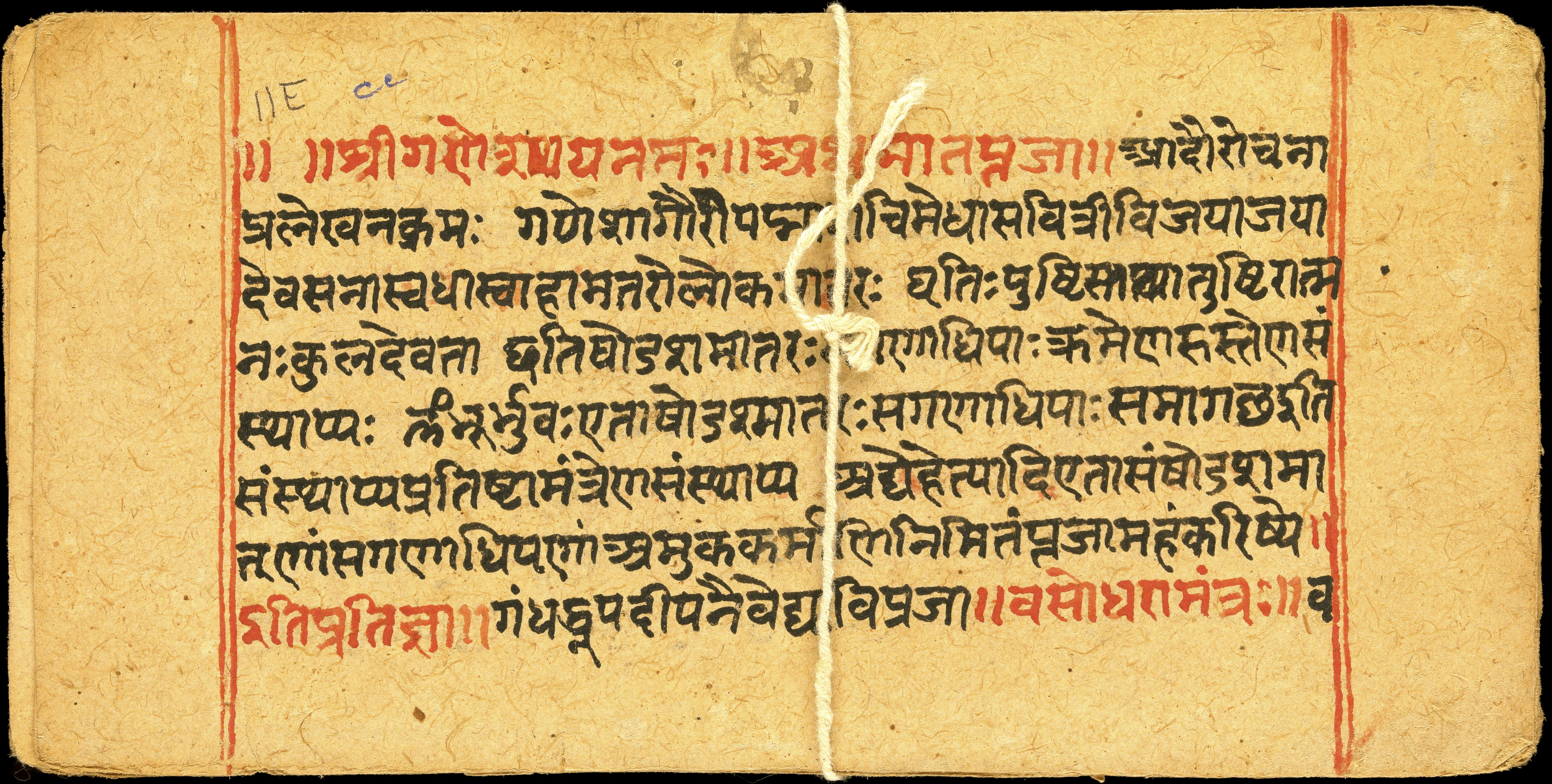
The second approach is linguistic and cognitive training through Sanskrit and classical poetry. In a recent video, Swami Chidananda Puri discussed how to improve children’s concentration spans, which are fracturing in a cell-phone-always-on world. Swamiji points out that learning Sanskrit builds your power to break things down to understand their true meaning, so you no longer blindly believe surface-level claims. Once you understand technical concepts like Dhatu (verbal roots), Upasarga (prefixes), and Sandhi (word compounding), you get used to splitting things apart to find the truth.
Classical poetry introduces an even deeper exercise in patience. Prose is easy because the word order is predictable and immediate. In Sanskrit poetry, the verb might be in the first line and the noun in the fourth because the poet organized them to fit a rigid meter. You often have to read the entire verse just to understand the very first line. This rigorous process of decoding is called finding the Anvaya (the natural word order). Finding the Anvaya takes an investment of time, but that specific speed bump is exactly what helps you understand the verse in depth. (Read Understanding a sloka for an example)
The final approach is rooted in ancient spiritual and philosophical wisdom, mirrored beautifully in the Brihadaranyaka Upanishad. Here, Yajnavalkya instructs Maitreyi on the exact steps to realize Brahman: the Self must be heard of (Sravanam), reflected on (Mananam), and meditated upon (Nididhyasanam).
To truly comprehend anything of substance, you can’t outsource your thinking to the hyper-speed of external automated agents. You have to intentionally slow down, push back against the urge for instant output, and give your brain the space to absorb, process, and relate information to what you already know. Constant mananam and nididhyasanam are required to comprehend anything deeply. True intellect isn’t about how fast we can generate answers; it’s about our willingness to sit with the slow friction of thought.